
Basement & Crawl Space Mold Remediation in Gettysburg, PA
Basement mold remediation in Gettysburg, PA starts with one fact: most homes here sit on old stone, damp clay soil and a water table that rises every spring, so the space below your floor is the most likely place in the house for mold to grow. We remove mold from basements and crawl spaces, fix the moisture that fed it, and set the space up to stay dry through humid Adams County summers. We're open 24 hours at (717) 420-8919.
Open 24 hours · Free, no-obligation estimate
Get a Free Mold Estimate
Answered 24/7. No obligation.
This page covers what our basement and crawl space work includes, the warning signs to watch for, how the job runs step by step, how the main methods compare, and what drives the price. If you want the bigger picture first, start with our overview of mold remediation services in Gettysburg.
What Basement and Crawl Space Mold Remediation Includes
Remediation is more than wiping off what you can see. The goal is to physically remove mold growth, clean the air and surfaces, and correct the moisture source so the mold does not come back. The EPA is clear on this point: if you clean up mold but don't fix the water problem, the mold will return.
A typical basement or crawl space project with us includes:
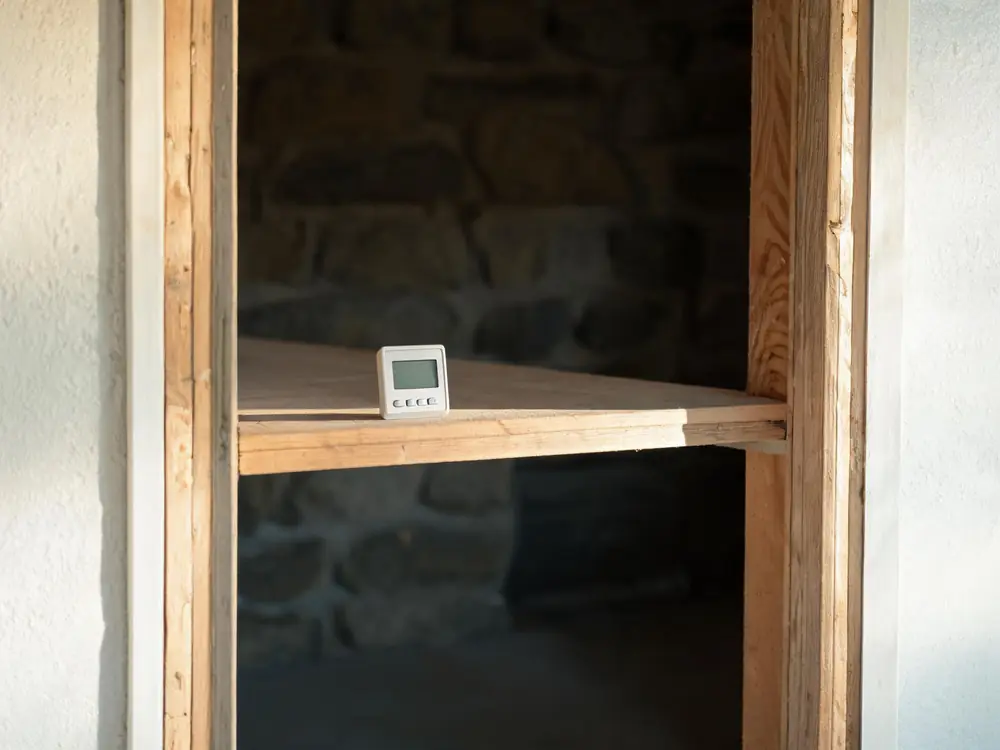
- Moisture mapping. We use moisture meters and hygrometers to find wet walls, damp joists and high humidity zones, not just the stains you can see.
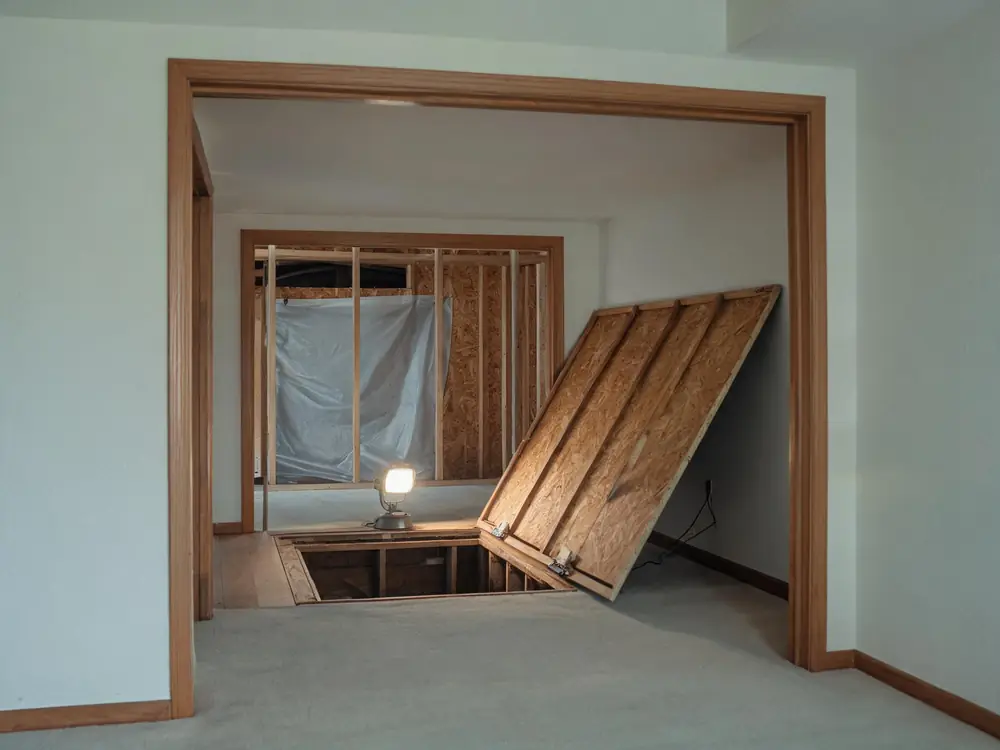
- Containment. Plastic sheeting and negative air pressure keep spores in the work area and out of your living space upstairs.
- HEPA air filtration. Air scrubbers run during the job to capture airborne spores and dust.
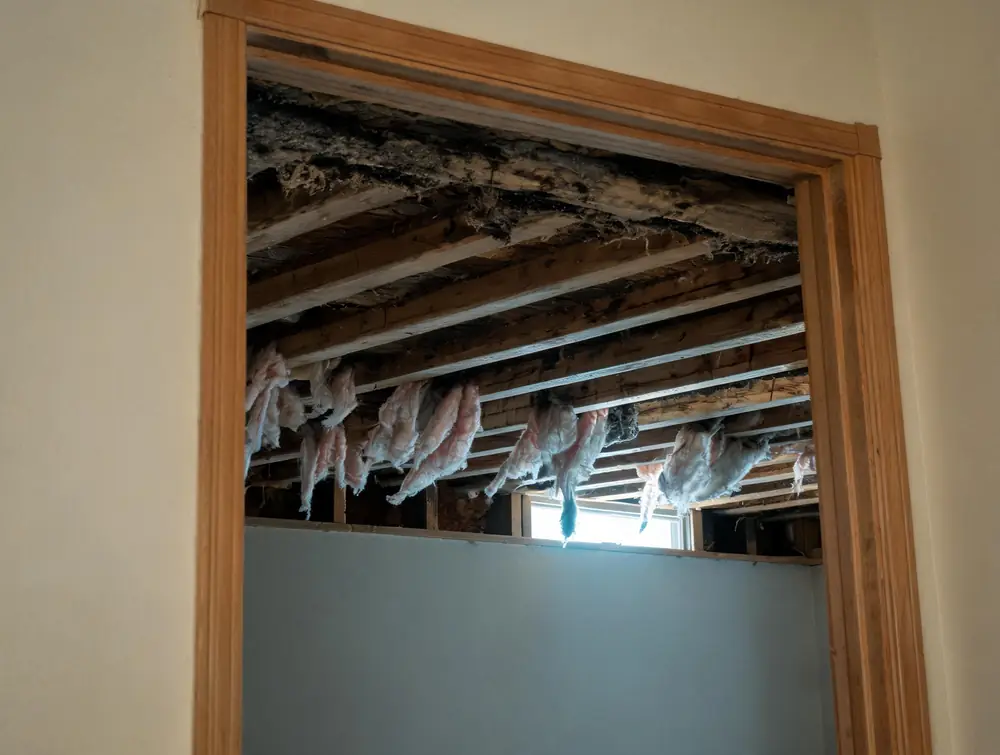
- Removal of damaged porous materials. Moldy drywall, carpet, insulation, cardboard and paneling usually can't be saved and are bagged and removed.
- Cleaning of structural wood and masonry. Joists, sills, subfloor and stone or block walls are HEPA vacuumed, scrubbed or blasted, and treated.
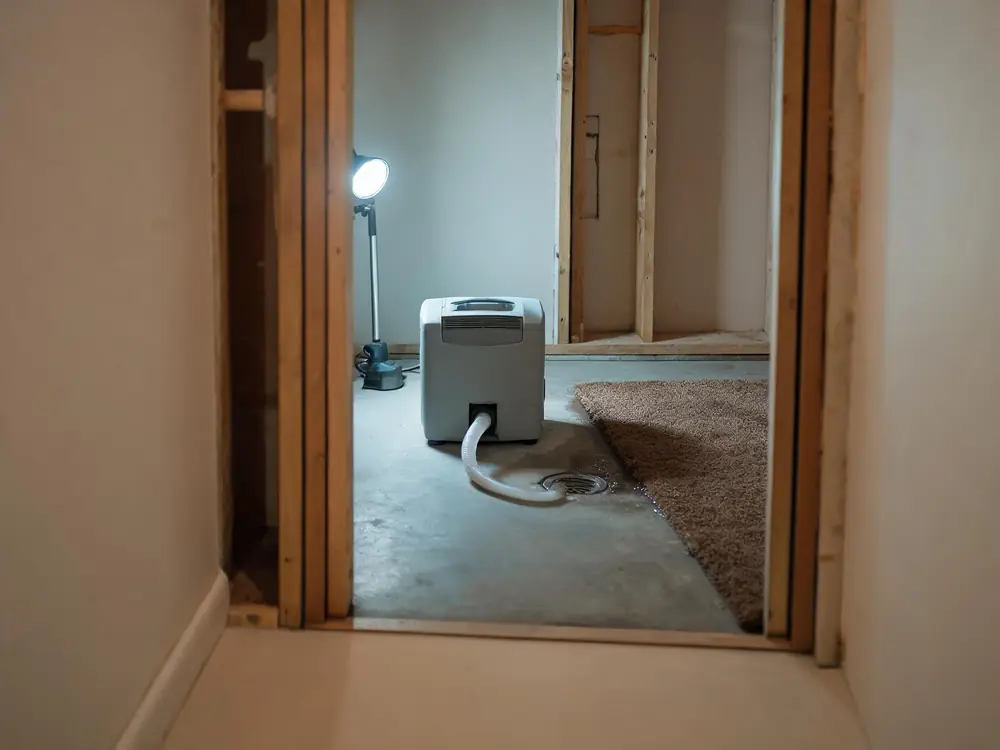
- Moisture correction. That can mean a dehumidifier, a vapor barrier or full encapsulation, grading and gutter fixes, or a sump pump repair.
- Verification. We recommend independent clearance testing so a third party confirms the space is clean before rebuilding.
When the problem started with a flood, a burst pipe or a failed pump, the drying side of the job matters as much as the mold side. Our water damage and mold restoration service handles both together.
Signs You Need Basement Mold Remediation
Basements and crawl spaces are easy to ignore because nobody lives down there. By the time a smell reaches the kitchen, mold has often been growing for months. Watch for these signs:
- A musty, earthy smell that is stronger in summer or after rain
- Fuzzy white, green, gray or black growth on joists, sill plates, stored boxes or the backs of furniture
- Dark spotting on the bottom few feet of drywall or paneling in a finished basement
- Water stains, tide lines or damp soil along the base of stone or block walls
- Condensation dripping from cold water pipes or ductwork in July and August
- Rust on the water heater base, furnace cabinet or metal shelving
- Warped or cupping floors in the rooms above a crawl space
- A relative humidity reading above 60% on a basement hygrometer
One common false alarm: white, crusty or fuzzy deposits on stone and concrete are often mineral salts, not mold. Our guide on efflorescence vs. mold shows a simple water test that tells the two apart. Salts on the wall still mean water is moving through the masonry, so they're worth watching.
If the rooms above smell musty but you see nothing, look at the wood framing. Our article on mold on floor joists explains what that growth looks like and when it's a structural worry.
Our Basement and Crawl Space Mold Remediation Process
Every job follows the same core sequence, based on the IICRC S520 standard for professional mold remediation and EPA guidance. You can read the full version of our mold remediation process, but here is how it applies below grade.
- Inspection and moisture assessment. We look at the walls, floor, framing, drainage, sump, HVAC and exterior grading. We measure humidity and material moisture and photograph what we find.
- Written scope and estimate. You get a plan that lists what will be removed, what will be cleaned, and what moisture fixes we recommend, with a price.
- Containment and protection. We seal the basement door or crawl space access, cover HVAC returns, and set up negative air so spores don't travel upstairs.
- Removal. Moldy porous materials such as drywall, insulation, carpet and stored cardboard are bagged inside containment and carried out.
- Cleaning. Wood framing is HEPA vacuumed and scrubbed or media blasted. Stone and block are brushed and cleaned. Surfaces are wiped with an EPA-registered antimicrobial where appropriate.
- Drying and moisture control. Dehumidifiers bring the space down to a safe range. We install or recommend a vapor barrier, encapsulation, or drainage fixes.
- Final cleaning and clearance. A final HEPA pass, then we recommend an independent clearance test before any rebuild.
- Prevention plan. You get a target humidity, a dehumidifier setting and a short list of seasonal checks.
Remediation Methods Compared
There is no single right method for every basement. The right choice depends on the material, how deep the growth goes and how easy the area is to reach. Here is how the main options compare.
| Method | Best for | Pros | Limits |
|---|---|---|---|
| HEPA vacuum and hand scrub | Light surface growth on joists and walls | Low mess, precise, fine for small areas | Slow on large areas; hard in tight crawl spaces |
| Soda or media blasting | Heavy growth on large areas of framing | Fast, reaches rough wood grain | Needs full containment and cleanup of media |
| Dry ice blasting | Large framing areas where no residue is wanted | No secondary media left behind, fast | Higher equipment cost; noisy |
| Removal and replacement | Drywall, carpet, insulation, badly damaged wood | Removes the problem for good | Adds rebuild cost |
| Antimicrobial treatment | Follow-up after physical cleaning | Helps treat residual growth on cleaned surfaces | Not a substitute for removal |
| Encapsulation or vapor barrier | Crawl spaces with dirt floors | Cuts ground moisture, the root cause | Must be paired with cleaning first |
Spraying bleach or a fogger over moldy joists without physical removal is the most common mistake we see. It can change the color of the stain without removing the growth or fixing the moisture.
Crawl space moisture control options
For crawl spaces, the long-term fix is almost always keeping ground moisture out. A basic vapor barrier covers the dirt floor with plastic. Full encapsulation seals the floor, walls and vents and usually adds a dehumidifier. Our article on crawl space encapsulation vs. vapor barrier compares cost and results for Pennsylvania homes.
Finished basements
Finished basements hide mold behind drywall, under carpet pad and inside stud cavities against cold foundation walls. Removal usually means opening the wall a foot or two above the visible damage. Read more about mold in a finished basement and how to rebuild so it stays dry.
Why Gettysburg Basements Get Mold
Gettysburg is a special case. Much of the borough is the Gettysburg Historic District, with brick and frame homes from the 1800s built on fieldstone and rubble foundations. Those walls were laid with lime mortar and no waterproofing. They were meant to breathe, which means ground water wicks through the stone and evaporates into the basement air.
Add a high spring water table, clay soils, and about 43 inches of precipitation a year, and many basements here run damp from March through October. July and August bring hot, humid air that condenses on cool stone walls and pipes. Late-summer and fall tropical storm remnants have flooded this region before, including Agnes in 1972, Ivan in 2004 and Lee in 2011. Low areas near Marsh Creek and Rock Creek feel these events first.
Newer homes on the edges of town have their own issues: crawl spaces under additions, open vents that pull in humid summer air, and finished basements built over block walls without a moisture break. Rental houses near Gettysburg College often have unfinished basements used for storage, where cardboard boxes and old furniture feed mold.
Historic stone needs special care. Aggressive blasting, cement parging or sealing the wall with the wrong coating can trap moisture and damage soft mortar. Our guide to mold in stone foundation basements explains how we clean these walls without harming them. If your work touches the exterior of a home in the historic district, such as regrading or new downspouts on a street-facing side, check with the Borough of Gettysburg about HARB review first. The Gettysburg Borough website lists current contacts.
Sump Pumps, Flooding and Humidity
Many Gettysburg basements rely on a sump pump during spring melt and heavy storms. When a pump fails during a storm, a basement can take on inches of water in hours. Our article on sump pump failure and mold walks through what to do in the first 48 hours.
Even without flooding, humidity alone can grow mold. The EPA recommends keeping indoor relative humidity below 60%, ideally between 30% and 50%. Our guide to the ideal basement humidity to prevent mold covers dehumidifier sizing and settings for humid Pennsylvania summers. The EPA's brief guide to mold, moisture and your home is also a good plain-language read.
What Affects Basement Mold Remediation Cost
We price each job after an inspection, because two basements of the same size can need very different work. The biggest cost drivers are:
- Square footage affected. The EPA uses 10 square feet as a rough line between a small job and one that calls for more care.
- Materials involved. Cleaning bare joists costs less than tearing out a finished basement.
- Access. A low crawl space with 18 inches of clearance takes more labor than a walk-in basement.
- Moisture fixes. A dehumidifier is a small add-on; full encapsulation or drainage work is a bigger one.
- Historic materials. Stone walls and old-growth lumber call for gentler, slower methods.
- Testing. Pre-work testing and independent clearance testing are separate line items.
| Job type | Typical Gettysburg range |
|---|---|
| Small area, under 10 sq ft | $500-$1,500 |
| Basement or crawl space | $1,500-$6,000 |
| Whole home | $10,000-$30,000+ |
These are typical public ranges, not quotes. Final pricing comes after we inspect. For deeper breakdowns, see our guides to basement mold remediation cost and crawl space mold remediation cost, or our main mold remediation cost page, which also covers insurance.
Can You Handle Basement Mold Yourself?
For a small patch under 10 square feet on a hard surface, the EPA says many homeowners can clean it themselves with detergent and water, gloves, goggles and an N-95 respirator. Dry the area fully and fix the leak.
Call a professional when the area is larger, when mold is on framing or inside walls, when the space took on sewage or flood water, when anyone in the home has asthma, allergies or a weak immune system, or when you're selling a home and need documentation. The CDC's mold basics page describes who is most sensitive. If you have health concerns, talk to your doctor.
Why Gettysburg Homeowners Call Us for Basement and Crawl Space Mold
We Know Old Stone Foundations
Fieldstone and rubble walls are common across the Gettysburg Historic District, and they need a different approach than poured concrete. We clean them without harsh blasting, avoid coatings that trap moisture in soft lime mortar, and focus on managing water and humidity instead of trying to seal a wall that was built to breathe. That protects both the house and your budget, because you are not paying to fix damage caused by the wrong method.
We Fix the Moisture, Not Just the Mold
Every estimate we write includes the moisture source, whether it is a failed sump pump, a downspout dumping next to the foundation, open crawl space vents, or a basement that sits at 70% humidity every August. We explain what is causing the problem in plain words and give you options at different price points. Mold that is removed without a moisture fix usually comes back, and we would rather tell you that up front.
Open 24 Hours, Built Around Standards
Basements flood at night and during storms, so we answer the phone 24 hours a day. Our work follows the IICRC S520 standard and EPA guidance: containment, negative air, HEPA filtration, physical removal and careful cleanup. We recommend independent clearance testing so someone other than us confirms the result. You get photos, a written scope and clear pricing before work starts, with no pressure.
Get Your Basement or Crawl Space Checked
If your basement smells musty, took on water, or you just found growth on the joists, don't wait for it to spread. Call us at (717) 420-8919, any hour, or use the form on this page to request an inspection. We'll tell you what we find, what caused it, and what it will take to fix it for good.
Before and after
Basement & Crawl Space Mold Remediation in Gettysburg: Before and After
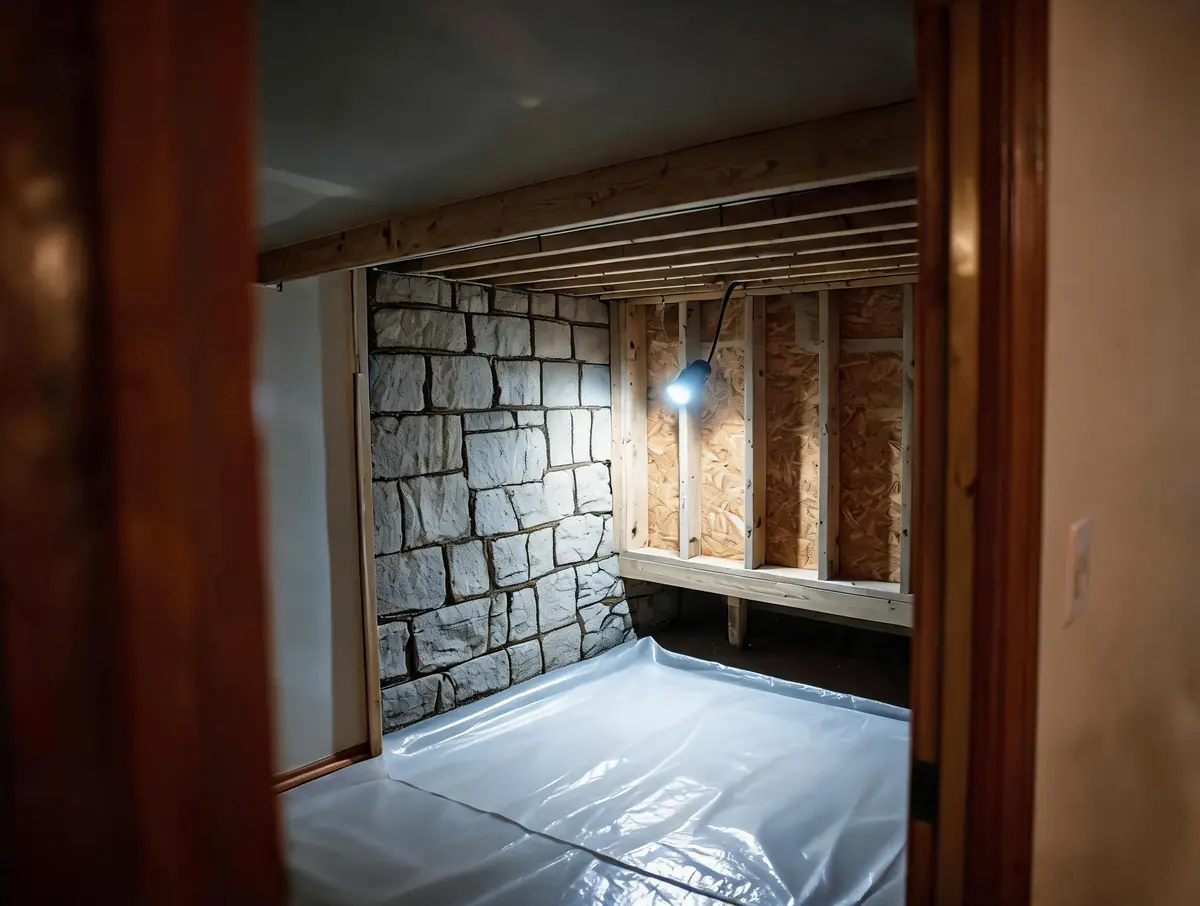
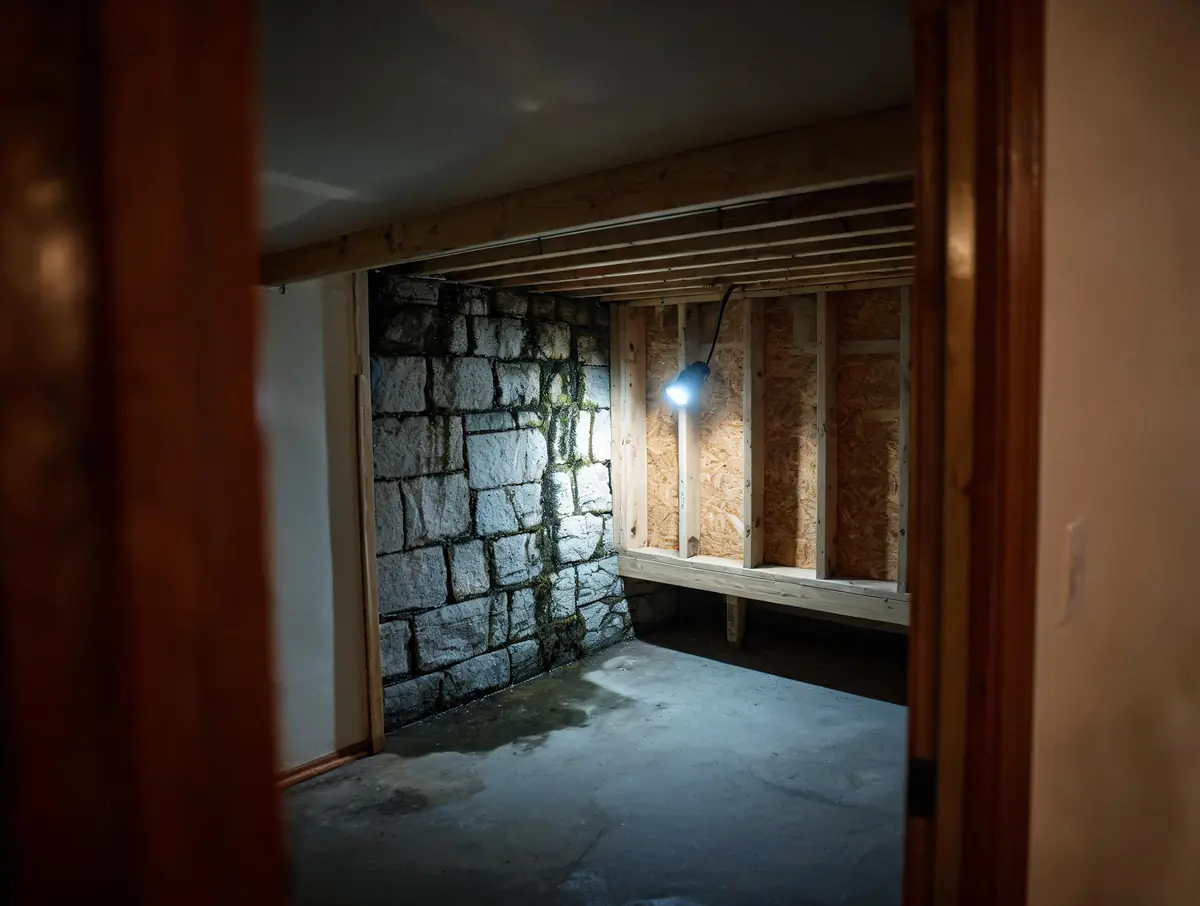 BeforeAfter
Drag the handle to compare. Every property is different — we scope yours on site.
Basement & Crawl Space Mold Remediation FAQs
How much does basement mold remediation cost in Gettysburg?
Typical ranges run about $500-$1,500 for a small area under 10 square feet and $1,500-$6,000 for a basement or crawl space. Heavy growth, finished basements and encapsulation can push the total higher. We give a firm price only after an inspection. See basement mold remediation costs.
Is white fuzz on my stone basement wall mold?
Often it is efflorescence, a mineral salt left behind when water evaporates from masonry. Salt dissolves in water and crumbles to powder, while mold smears and does not dissolve. Either way it means moisture is moving through the wall, so it is worth checking. More on telling efflorescence from mold.
Should I seal my old fieldstone foundation to stop mold?
Usually not with cement parging or waterproof paint. Historic lime-mortar stone walls need to release moisture, and trapping it can damage mortar and move the problem elsewhere. Managing drainage, grading and humidity is normally the better approach. More on mold in stone foundation basements.
Do I need crawl space encapsulation after mold removal?
Not always, but a dirt-floor crawl space with open vents will keep feeding mold in humid Gettysburg summers. At a minimum we recommend a proper vapor barrier. Full encapsulation with a dehumidifier gives the most control. See encapsulation vs. a vapour barrier.
How long does basement mold remediation take?
Most basement and crawl space jobs take one to four days, depending on size, how much material comes out and how long drying takes. Rebuilding a finished basement is a separate step after clearance. See how long mold remediation takes.
Can I stay in my house during basement mold remediation?
In most cases, yes. We seal off the basement or crawl space with containment and negative air pressure so spores stay in the work area. People with asthma, allergies or weakened immune systems may want to ask their doctor about staying elsewhere during the work. More on whether you need to move out.
Other Mold Services in Gettysburg
If you smell something musty, see a stain you can't explain, or are about to buy an older house, a professional mold inspection in Gettysburg, PA tells you what is growing, where the moisture is coming from, and what it will take to fix it. We look at your home the way a moisture detective would, then use air or surface testing only when it answers a real question. You get clear findings in plain language, not a scary lab printout.
Mold Inspection and Testing
Black mold removal in Gettysburg, PA starts with finding the water that feeds the mold, then sealing off the area so spores stay put while we remove what's growing. If you've found dark, slimy patches on drywall, wood, or ceiling tiles, you don't need to panic, but you shouldn't wait either. We're open 24 hours at (717) 420-8919, and we'll tell you plainly what you're dealing with and what it will take to fix.
Black Mold Removal
Attic mold remediation in Gettysburg, PA starts with one question: where is the moisture coming from? We remove mold from roof sheathing, rafters and trusses, fix the ventilation or venting problem that fed it, and treat the wood so the attic stays dry and clean. We're open 24 hours at (717) 420-8919.
Attic Mold Remediation
Water damage mold restoration in Gettysburg, PA starts the moment water gets where it should not be, because the clock on mold growth is already running. We dry the structure, find hidden moisture, remove anything that has started to grow mold, and put your home back on a path to normal. We are open 24 hours at (717) 420-8919 for leaks, floods and burst pipes.
Water Damage & Mold Restoration
Air duct mold removal in Gettysburg, PA works best when the whole HVAC system is treated as one unit: the ductwork, the evaporator coil, the drain pan, the blower and the air handler cabinet. We clean each part, fix the moisture that let mold grow and verify the results, and we're open 24 hours at (717) 420-8919.
HVAC and Air Duct Mold Remediation
Commercial mold remediation in Gettysburg, PA has to fit around tenants, guests, closing dates and business hours, and that is how we plan every job. We work with landlords, property managers, business owners, home sellers and caretakers of historic buildings in Gettysburg, the Adams County seat, and we are open 24 hours when a leak or a failed inspection cannot wait.
Commercial, Rental and Real Estate Mold Remediation
Mold remediation cost in Gettysburg, PA typically runs $500 to $1,500 for a small area under 10 square feet, $1,500 to $6,000 for a basement or crawl space, and $10,000 to $30,000 or more for a whole home. This page breaks down what those numbers include, what pushes a job up or down, how homeowners insurance treats mold, and how to read an estimate so you only pay for work you need.
Mold Remediation Cost
Our mold remediation process follows the IICRC S520 standard step by step, from the first inspection to independent clearance testing and rebuild, so mold in your Gettysburg home is removed at the source and the moisture that fed it is fixed. Here is what happens on a job, what it costs, and how to keep mold away.
Our Mold Remediation Process
Need Basement & Crawl Space Mold Remediation in Gettysburg?
We answer 24 hours a day. Free, no-obligation estimate after an on-site look.