
Our Mold Remediation Process in Gettysburg, PA
Our mold remediation process follows the IICRC S520 standard step by step, from the first inspection to independent clearance testing and rebuild, so mold in your Gettysburg home is removed at the source and the moisture that fed it is fixed. Here is what happens on a job, what it costs, and how to keep mold away.
Open 24 hours · Free, no-obligation estimate
Get a Free Mold Estimate
Answered 24/7. No obligation.
If you are still getting your bearings, start with what mold remediation is. The short version: remediation is a controlled process. It keeps spores from spreading while damaged material comes out, then proves the space is clean before walls go back up. That is why mold removal vs. mold remediation matters when you compare quotes.
What's Included in Professional Mold Remediation
Every project is sized to the problem, but a complete mold remediation process covers the same core pieces. Each will be on your written scope, or we will explain why it is not needed.
- Moisture investigation: finding the leak, humidity problem, or water event that let mold grow.
- Containment: plastic sheeting barriers, sealed vents, and zipper doors that isolate the work area.
- Negative air pressure and HEPA filtration: air scrubbers that pull air out of the work zone through HEPA filters.
- Removal of damaged porous materials: drywall, insulation, carpet, and pad that cannot be cleaned.
- Cleaning of salvageable surfaces: HEPA vacuuming, damp wiping, and sanding or blasting of framing and sheathing.
- Drying: dehumidifiers and air movers until materials reach normal moisture readings.
- Clearance testing: an independent check that the area is back to normal before containment comes down.
- Rebuild coordination: replacing drywall, insulation, and finishes once the space passes.
Signs You Need Mold Remediation, Not Just a Cleaning
Small spots on a shower grout line are a housekeeping job. Remediation is the right call when mold is widespread, hidden, or tied to a water problem that keeps coming back. Watch for these signs:
- Visible growth covering more than about 10 square feet, the size the EPA's mold and moisture guide uses as the line for bringing in a professional.
- A musty smell that lingers in a basement, closet, or finished room even after cleaning.
- Stained, soft, or bubbling drywall and ceiling spots after a leak.
- Water that sat for more than 24 to 48 hours, which is when mold can begin to grow on wet materials.
- Mold on or in HVAC equipment, ductwork, or insulation.
- Family members with allergy-like symptoms that ease when they leave the house. The CDC notes mold can trigger symptoms in sensitive people, so talk to your doctor about health concerns.
Not sure what you are looking at? A visual assessment with moisture mapping comes first. We can explain the options for mold inspection and testing before any demolition starts.
Our Mold Remediation Process, Step by Step
Here is how we work through a job in Gettysburg. The steps come from the IICRC S520 Standard for Professional Mold Remediation, the industry reference published by the IICRC. We scale them to the size of the problem, but we do not skip them.
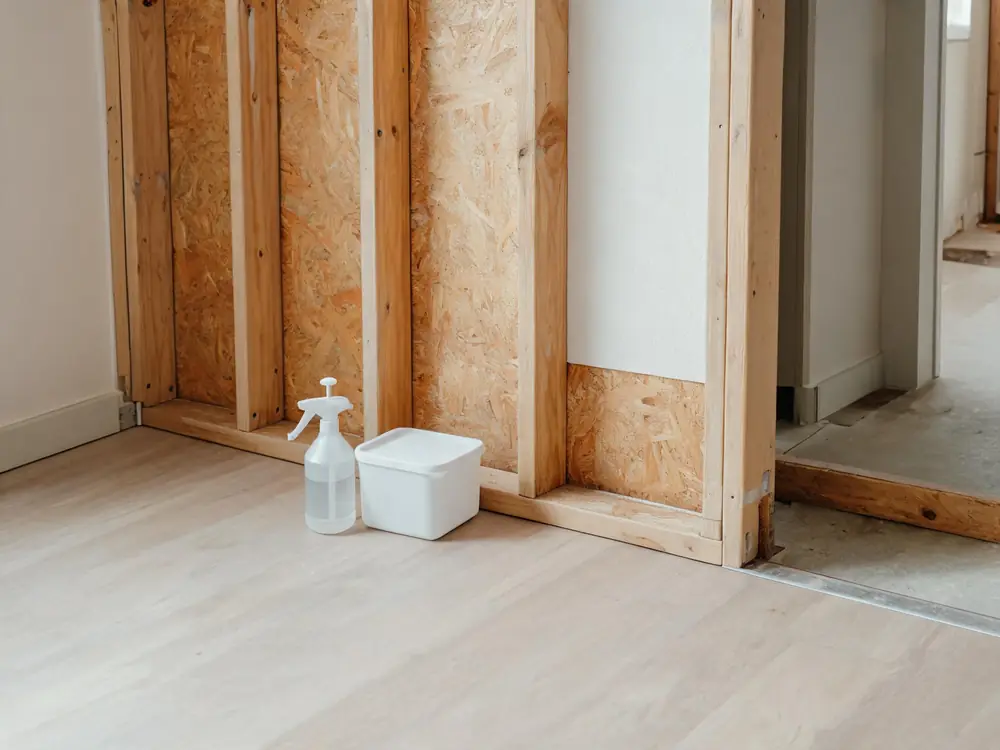
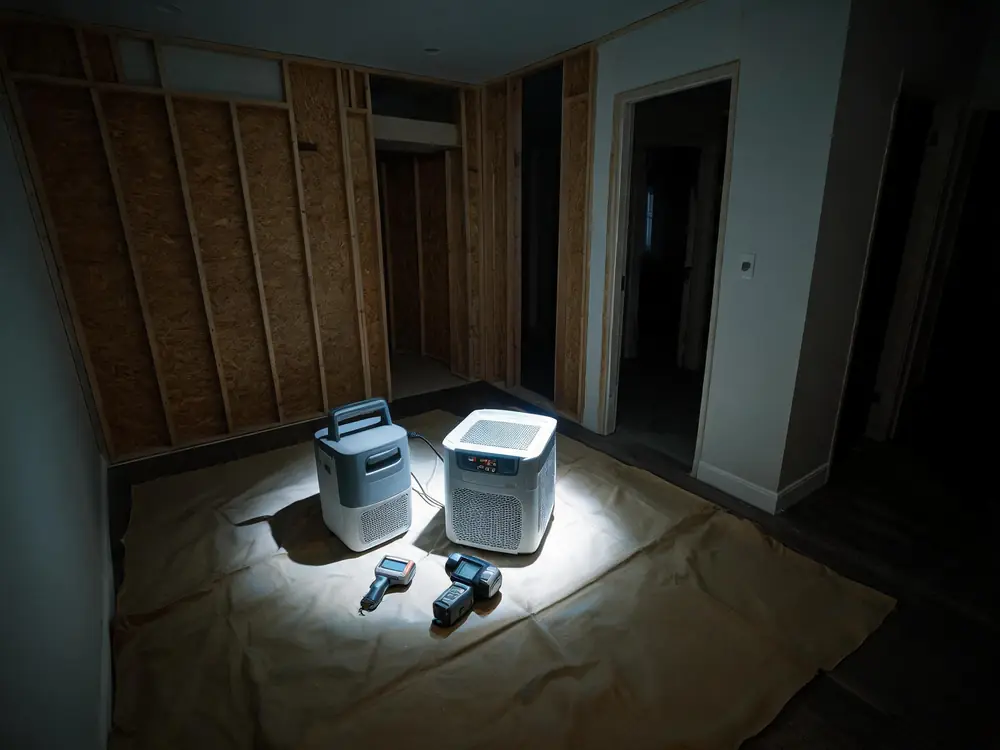
- Inspection and moisture mapping. We look at visible growth, check walls, floors, and framing with moisture meters, and use thermal imaging to spot cold, damp areas behind finishes. The goal is to find where the water comes from and how far the damage runs. If you want lab data, we recommend sampling by an independent tester so the results are not tied to our quote.
- Written scope and plan. You get a plain-language plan: which rooms, which materials come out, how the area will be contained, and what the source fix is. Pricing comes from this scope, not from a guess over the phone.
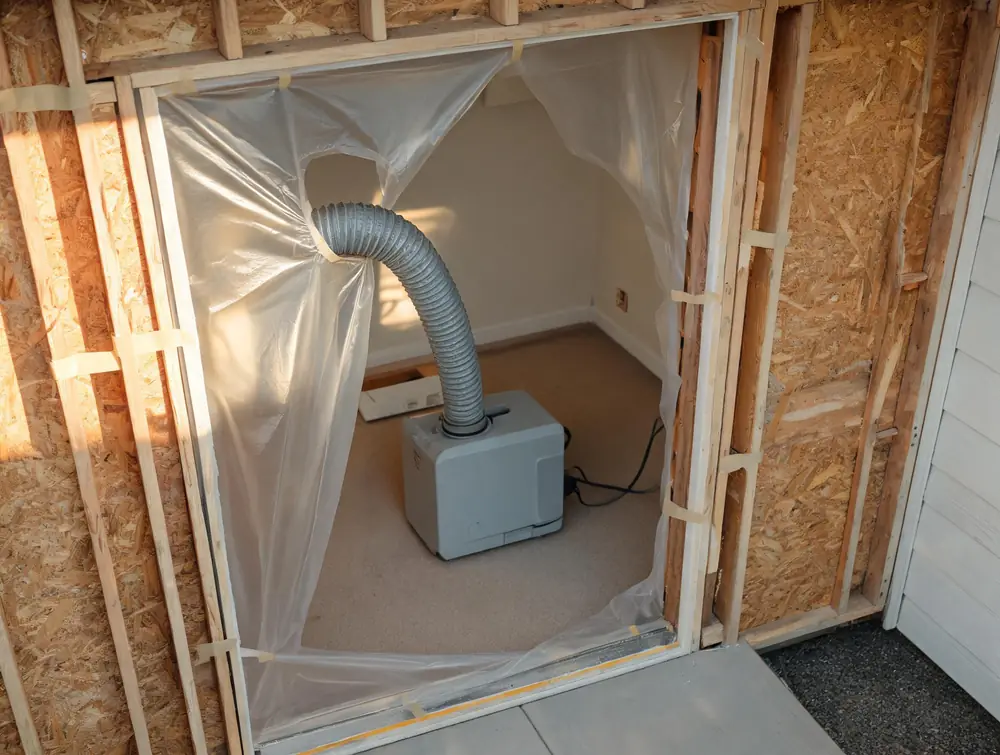
- Containment. We build barriers from 6-mil polyethylene sheeting, seal HVAC supply and return vents in the work area, and install a zipper door for entry. Small jobs may need only limited containment. Larger jobs get full containment with an airlock, following S520 guidance.
- Negative air and HEPA filtration. HEPA air scrubbers exhaust air from the contained area, often to the outside. This keeps the work zone at lower pressure than the rest of the house, so air flows in, not out. HEPA filters capture at least 99.97% of particles at 0.3 microns, which includes mold spores.
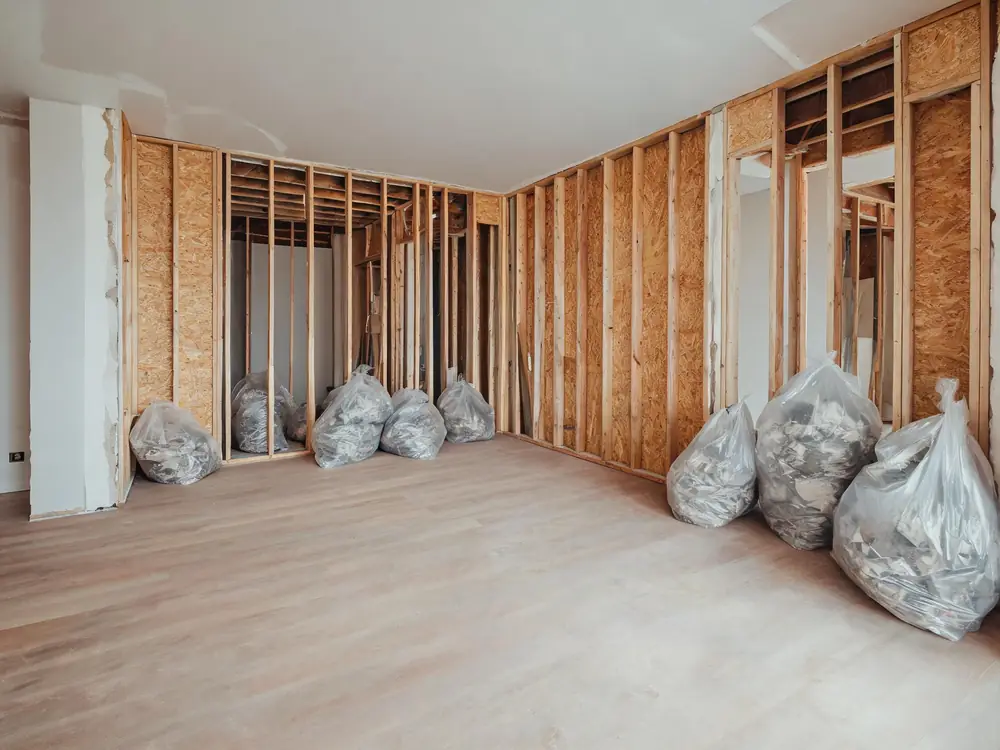
- Removal of contaminated material. Moldy drywall, insulation, carpet, and ceiling tiles are cut out, bagged in heavy plastic inside the containment, and sealed before they leave. Porous materials with growth generally cannot be cleaned well enough to save.
- HEPA vacuuming and cleaning. Studs, joists, subfloor, and sheathing are HEPA vacuumed, then damp wiped with a detergent or antimicrobial solution. Where growth has stained wood, we sand or blast the surface. The aim is physical removal. A dead spore can still cause allergic reactions, so killing mold is not the same as removing it.
- Drying. Dehumidifiers and air movers bring framing and subfloor down to normal moisture content. We record readings so you can see the numbers, not just take our word for it.
- Independent clearance testing. Before containment comes down, we recommend a third-party inspector confirm the area passes a visual check and, where appropriate, air or surface sampling. If it fails, we clean again at no extra charge for the work we already scoped.
- Rebuild. After clearance, new insulation, drywall, and finishes go in. We can coordinate this so the house is put back together, not left open.
Wondering about schedule? Most homes take 1 to 5 days of active work, plus drying and testing. See how long mold remediation takes for timelines by job size. Many families also ask about staying home during mold remediation; with proper containment, many can.
Mold Remediation Methods Compared
Not every surface is handled the same way. The table below shows the common methods, where each fits, and where each falls short.
| Method | Best for | Limits |
|---|---|---|
| Remove and replace | Drywall, insulation, carpet, ceiling tile | Requires rebuild; most reliable for porous materials |
| HEPA vacuum and damp wipe | Framing, concrete, metal, hard surfaces | Surface growth only; does not fix deep rot |
| Sanding or wire brushing | Stained studs, joists, and subfloor | Dusty; must be done inside containment |
| Dry ice or soda blasting | Large areas of attic sheathing and joists | Higher equipment cost; best on big, open areas |
| Antimicrobial or encapsulant coating | Final step on cleaned wood | Not a substitute for removal; applied only after cleaning |
| Fogging alone | Supplemental odor control | Does not remove mold; not a remediation method on its own |
People often ask what permanently kills mold. The short answer: no spray does it alone. Removing the growth and keeping materials dry is what lasts.
DIY or Professional Remediation?
The EPA says a homeowner can often handle mold covering less than about 10 square feet, roughly a 3 by 3 foot patch, if they wear protection and the moisture problem is fixed. Beyond that, or when mold is inside walls, in HVAC, or tied to sewage or flood water, a professional process with containment is the safer path.
If your problem is small, our guide to DIY mold remediation covers the gear (an N95 respirator, gloves, and goggles), the steps, and the mistakes that spread spores. For bigger jobs, it helps to know how to choose a mold remediation company, including the questions to ask about containment, testing, and insurance.
Pennsylvania does not license mold remediation contractors, so training credentials are one of the few signals you have. Our article on mold remediation certifications explains what IICRC, ACAC, and NORMI credentials mean and how to check them.
What Affects the Price of Mold Remediation
Cost depends on how much material comes out and how hard the space is to work in. The main factors are:
- Size of the affected area in square feet.
- Location: attics, crawl spaces, and HVAC systems take more setup than an open basement.
- Materials: plaster and lath, fieldstone walls, and old-growth framing take more labor than modern drywall.
- Level of containment and number of air scrubbers.
- Source repair such as sump pumps, gutters, or plumbing.
- Testing and rebuild scope.
| Project | Typical Gettysburg range |
|---|---|
| Small area, under 10 sq ft | $500 to $1,500 |
| Basement or crawl space | $1,500 to $6,000 |
| Whole home | $10,000 to $30,000+ |
Nationally, professional mold remediation averages roughly $1,200 to $3,800. These are typical ranges, not quotes. Final pricing comes after an inspection. For a full breakdown, including insurance questions, see mold remediation cost in Gettysburg.
Can Your House and Belongings Be Saved?
Almost always, yes. Framing, subfloor, and concrete can usually be cleaned. Drywall and insulation get replaced. Homes are rarely a total loss unless structural wood has rotted badly or water damage was left for months. Read more on can a house with mold be saved for the rare exceptions.
Contents are more mixed. Hard items like glass, metal, and sealed wood clean up well. Mattresses, upholstered furniture, and paper often do not. Our guide to saving moldy belongings sorts items into clean, pro clean, and discard.
Mold Prevention After Remediation
Remediation fixes today's problem. Prevention keeps it from coming back. The EPA recommends keeping indoor relative humidity below 60%, ideally between 30% and 50%. In practice, that means:
- Run a dehumidifier in basements from late spring through early fall, set to about 50%.
- Vent bathroom fans outside, not into the attic.
- Keep gutters clear and downspouts extended at least 4 to 6 feet from the foundation.
- Grade soil so it slopes away from the house.
- Insulate pipes in unheated spaces before winter.
- Dry any leak or spill within 24 to 48 hours.
Our full guide on how to prevent mold goes room by room. Timing matters too: mold season in Pennsylvania peaks in humid late summer and wet fall.
Mold Remediation in Gettysburg's Older Homes
Gettysburg brings its own challenges. Much of the borough sits inside the Gettysburg Historic District, where 1800s brick and frame houses stand on stone and fieldstone rubble foundations. Those walls wick ground moisture, so basements stay damp even without a leak. Plaster walls and old-growth lumber also need a gentler hand than modern drywall. We clean and save original framing whenever it is sound, and exterior changes in the district may go through the Historic Architectural Review Board (HARB), so we plan source fixes like gutters and grading with that in mind.
The weather adds pressure. Gettysburg averages about 43 inches of precipitation a year, with humid Julys and Augusts and tropical storm remnants in late summer and fall. Storms like Agnes in 1972, Ivan in 2004, and Lee in 2011 flooded the region along creeks like Marsh Creek and Rock Creek. Freeze-thaw winters burst pipes in unheated crawl spaces, and spring snowmelt pushes water toward foundations. You can track local conditions through NWS State College. Rental houses near Gettysburg College and busy hotels, B&Bs, and restaurants along Steinwehr Avenue and Baltimore Street face the same moisture load with heavier use.
Why Gettysburg Homeowners Trust Our Mold Remediation Process
A Written Plan Built on IICRC S520
We follow the IICRC S520 standard for mold remediation on every job, and we put the plan in writing before work starts. You will see which rooms are contained, which materials come out, how many air scrubbers run, and what the moisture source fix is. That makes it easy to compare our scope to anyone else's, and it keeps the job from growing in surprise ways. If something changes once walls are open, we show you and explain it before moving ahead.
Clean Results Checked by Someone Else
We recommend independent clearance testing by a third party, not a test we run on our own work. That separation protects you. Before containment comes down, the area should pass a visual inspection and, where it makes sense, air or surface sampling. If it does not pass, we clean it again. You also get the moisture readings we record during drying, so you have documentation for your records, your insurer, or a future buyer.
Local, Open 24 Hours, and Built for Old Homes
We are based at 15-23 Baltimore St in downtown Gettysburg and answer the phone 24 hours a day. Burst pipes and flooded basements do not wait for business hours, and mold can start within 24 to 48 hours. We work in fieldstone basements, plaster walls, and tight attics every day, and we plan around historic district rules when a fix touches the exterior.
Start the Mold Remediation Process Today
The first step is a visit to see what you are dealing with. Call (717) 420-8919 any time, day or night, or fill out the form on this page, and we will set up an inspection, explain your options, and give you a written plan. You can also learn more about our full mold remediation in Gettysburg, PA services or contact us with questions.
Before and after
Our Mold Remediation Process in Gettysburg: Before and After
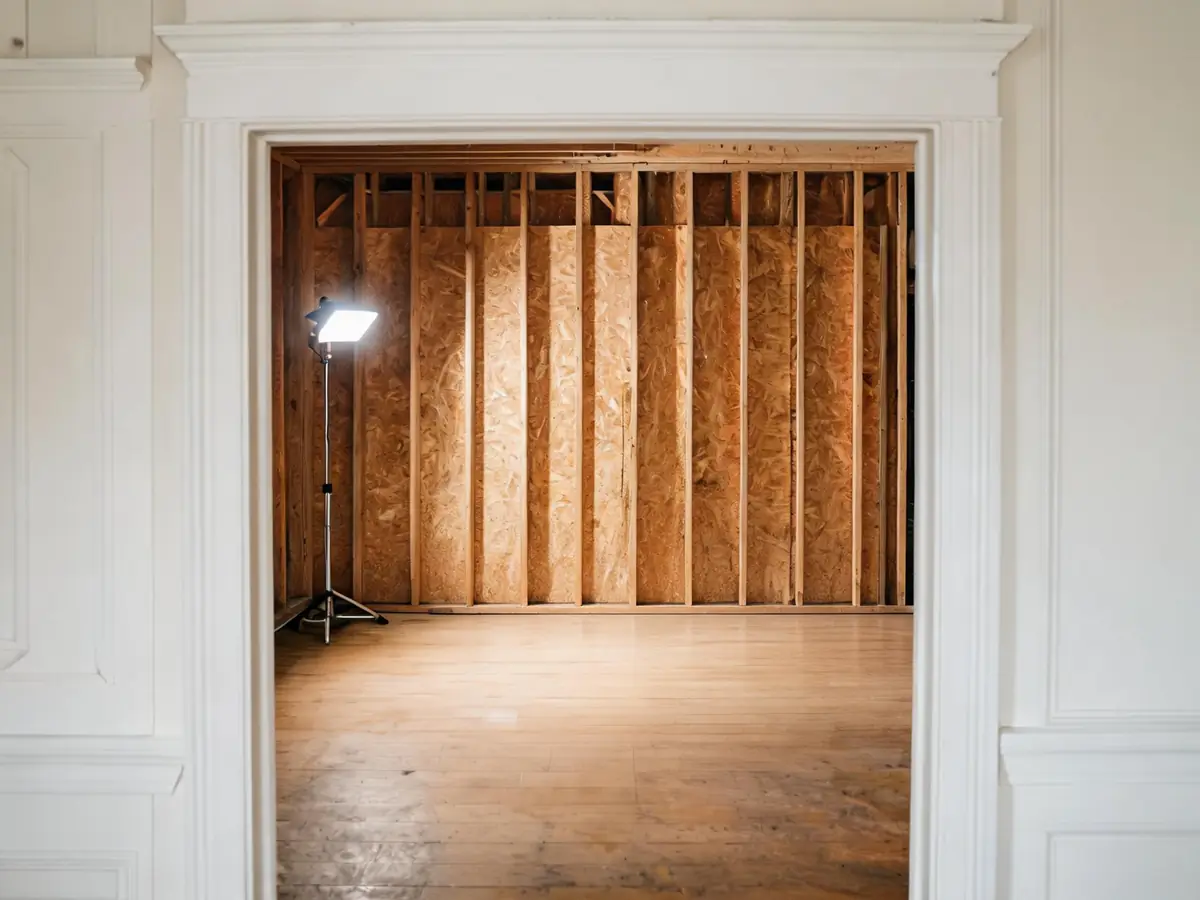
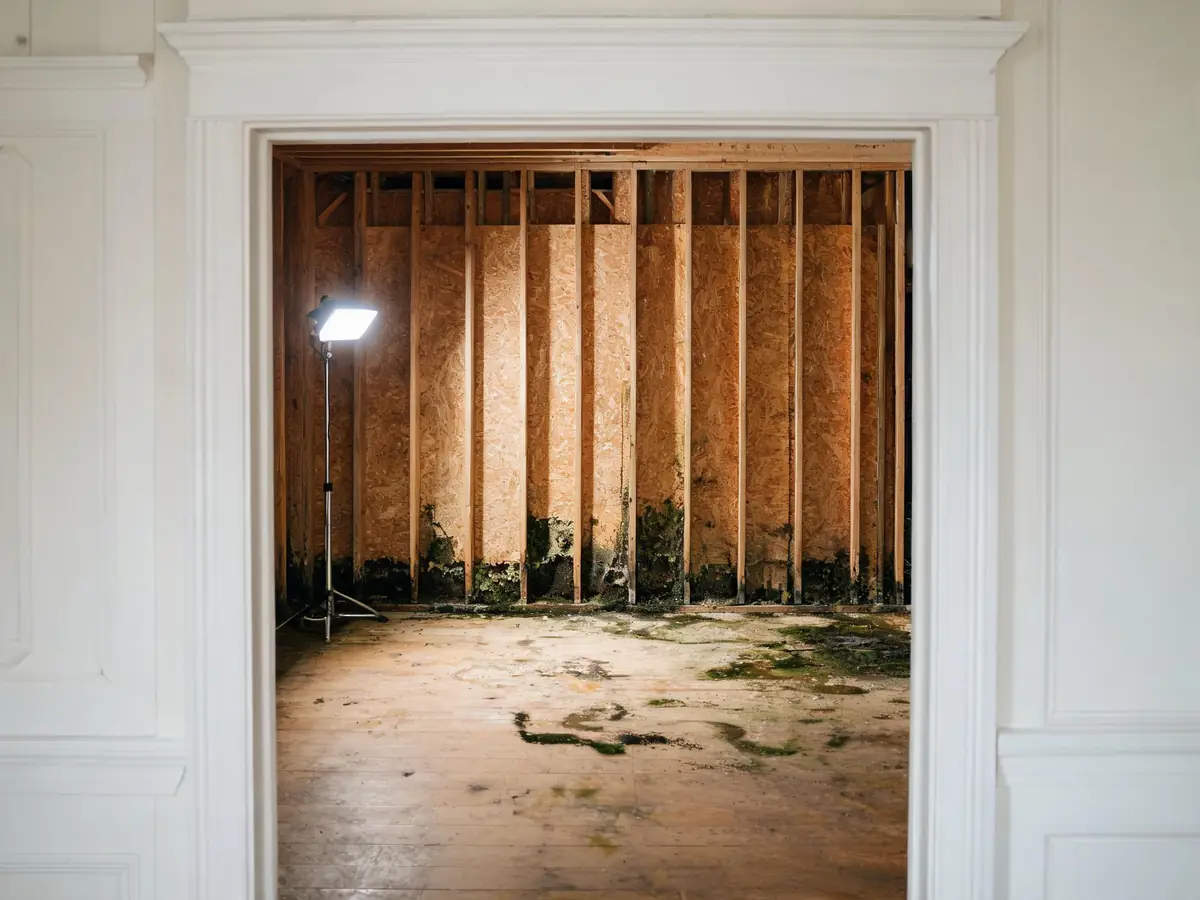 BeforeAfter
Drag the handle to compare. Every property is different — we scope yours on site.
Our Mold Remediation Process FAQs
What are the steps of the mold remediation process?
Following the IICRC S520 standard, the steps are inspection and moisture mapping, a written scope, containment, negative air with HEPA filtration, removal of damaged porous materials, HEPA vacuuming and cleaning, drying, independent clearance testing, and rebuild. The moisture source is fixed along the way so mold does not return. More on what mold remediation involves.
How long does the mold remediation process take?
Most residential jobs take 1 to 5 days of active work. Small areas can be done in a day, while basements, attics, or whole-home jobs take longer. Add time for drying, clearance testing, and rebuild. See how long each stage takes.
Do I need mold testing before remediation?
Not always. If mold is visible, the EPA notes sampling is often not needed to decide on cleanup. Testing helps when mold is suspected but hidden, when health concerns are involved, or when you want clearance data after the job. We recommend an independent tester so results are unbiased. More on when testing answers a real question.
Can I stay in my house during mold remediation?
Often, yes. With containment and negative air pressure, most families stay home during small and mid-size jobs. People with asthma, weakened immune systems, infants, or large jobs may be safer staying elsewhere. Ask your doctor if you have health concerns. More on whether you can stay in the house.
Will mold come back after remediation?
Mold returns only if moisture returns. That is why the source fix, such as a leak repair, better ventilation, or a dehumidifier, is part of the process. Keeping indoor humidity below 60%, ideally 30% to 50% per the EPA, is the best protection. See what stops mold coming back.
Does Pennsylvania require a license for mold remediation?
No. Pennsylvania has no state mold remediation license. That makes it important to ask a contractor about the standard they follow, their training, their insurance, and whether they support independent clearance testing. See what PA actually requires.
Other Mold Services in Gettysburg
If you smell something musty, see a stain you can't explain, or are about to buy an older house, a professional mold inspection in Gettysburg, PA tells you what is growing, where the moisture is coming from, and what it will take to fix it. We look at your home the way a moisture detective would, then use air or surface testing only when it answers a real question. You get clear findings in plain language, not a scary lab printout.
Mold Inspection and Testing
Black mold removal in Gettysburg, PA starts with finding the water that feeds the mold, then sealing off the area so spores stay put while we remove what's growing. If you've found dark, slimy patches on drywall, wood, or ceiling tiles, you don't need to panic, but you shouldn't wait either. We're open 24 hours at (717) 420-8919, and we'll tell you plainly what you're dealing with and what it will take to fix.
Black Mold Removal
Basement mold remediation in Gettysburg, PA starts with one fact: most homes here sit on old stone, damp clay soil and a water table that rises every spring, so the space below your floor is the most likely place in the house for mold to grow. We remove mold from basements and crawl spaces, fix the moisture that fed it, and set the space up to stay dry through humid Adams County summers. We're open 24 hours at (717) 420-8919.
Basement & Crawl Space Mold Remediation
Attic mold remediation in Gettysburg, PA starts with one question: where is the moisture coming from? We remove mold from roof sheathing, rafters and trusses, fix the ventilation or venting problem that fed it, and treat the wood so the attic stays dry and clean. We're open 24 hours at (717) 420-8919.
Attic Mold Remediation
Water damage mold restoration in Gettysburg, PA starts the moment water gets where it should not be, because the clock on mold growth is already running. We dry the structure, find hidden moisture, remove anything that has started to grow mold, and put your home back on a path to normal. We are open 24 hours at (717) 420-8919 for leaks, floods and burst pipes.
Water Damage & Mold Restoration
Air duct mold removal in Gettysburg, PA works best when the whole HVAC system is treated as one unit: the ductwork, the evaporator coil, the drain pan, the blower and the air handler cabinet. We clean each part, fix the moisture that let mold grow and verify the results, and we're open 24 hours at (717) 420-8919.
HVAC and Air Duct Mold Remediation
Commercial mold remediation in Gettysburg, PA has to fit around tenants, guests, closing dates and business hours, and that is how we plan every job. We work with landlords, property managers, business owners, home sellers and caretakers of historic buildings in Gettysburg, the Adams County seat, and we are open 24 hours when a leak or a failed inspection cannot wait.
Commercial, Rental and Real Estate Mold Remediation
Mold remediation cost in Gettysburg, PA typically runs $500 to $1,500 for a small area under 10 square feet, $1,500 to $6,000 for a basement or crawl space, and $10,000 to $30,000 or more for a whole home. This page breaks down what those numbers include, what pushes a job up or down, how homeowners insurance treats mold, and how to read an estimate so you only pay for work you need.
Mold Remediation Cost
Need Our Mold Remediation Process in Gettysburg?
We answer 24 hours a day. Free, no-obligation estimate after an on-site look.