
Mold guide
Efflorescence vs. Mold on Basement Walls: How to Tell the Difference
Efflorescence vs. mold is one of the most common questions we get from Gettysburg homeowners who spot white, fuzzy growth on a basement wall. Efflorescence is a mineral salt left behind when water moves through masonry and evaporates, while mold is a living fungus. A simple water test tells you which one you have in under a minute.

By Dale Hoffman, Remediation Lead
Published
What Is Efflorescence?
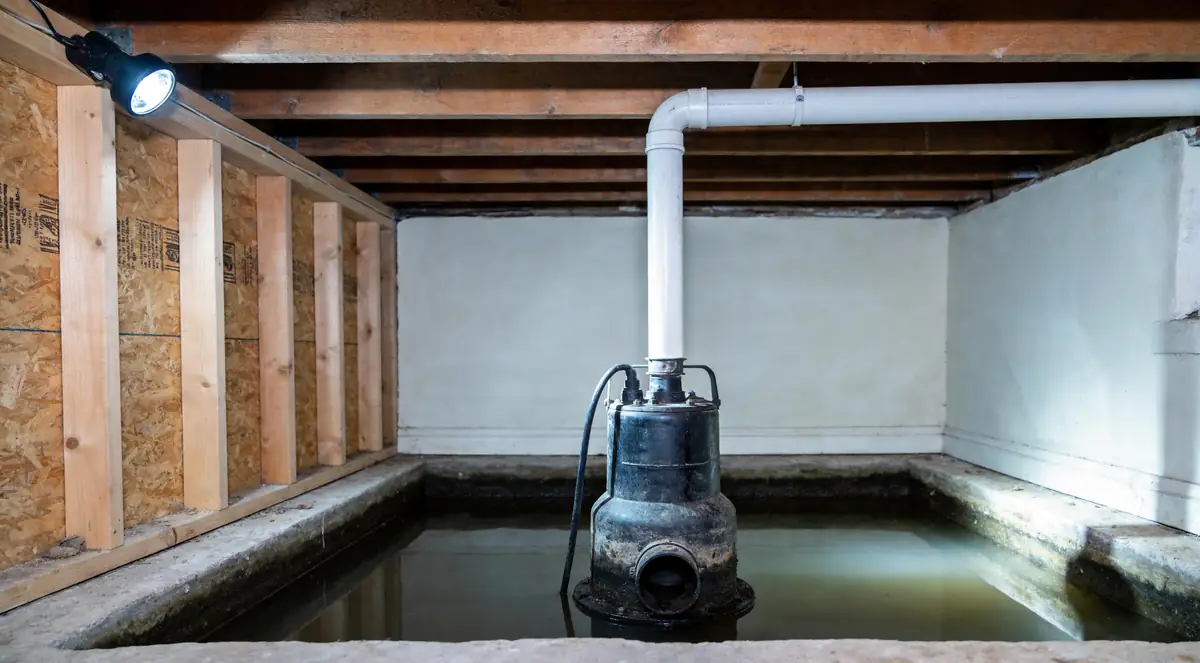
Concrete, block, brick, stone and mortar all contain natural salts. When water soaks into masonry, it dissolves those salts. As the water travels to the surface and evaporates, it leaves the salts behind as a white or grayish crust, powder or fluffy crystal growth.
Efflorescence is very common in Gettysburg basements. Many homes in the Gettysburg Historic District sit on fieldstone and rubble foundations laid in lime mortar, which let ground moisture pass through freely. Newer block basements show it too, especially after spring snowmelt and heavy rain.
If this is happening in your own home, our cleanup team can walk the property first.
What Is Mold?
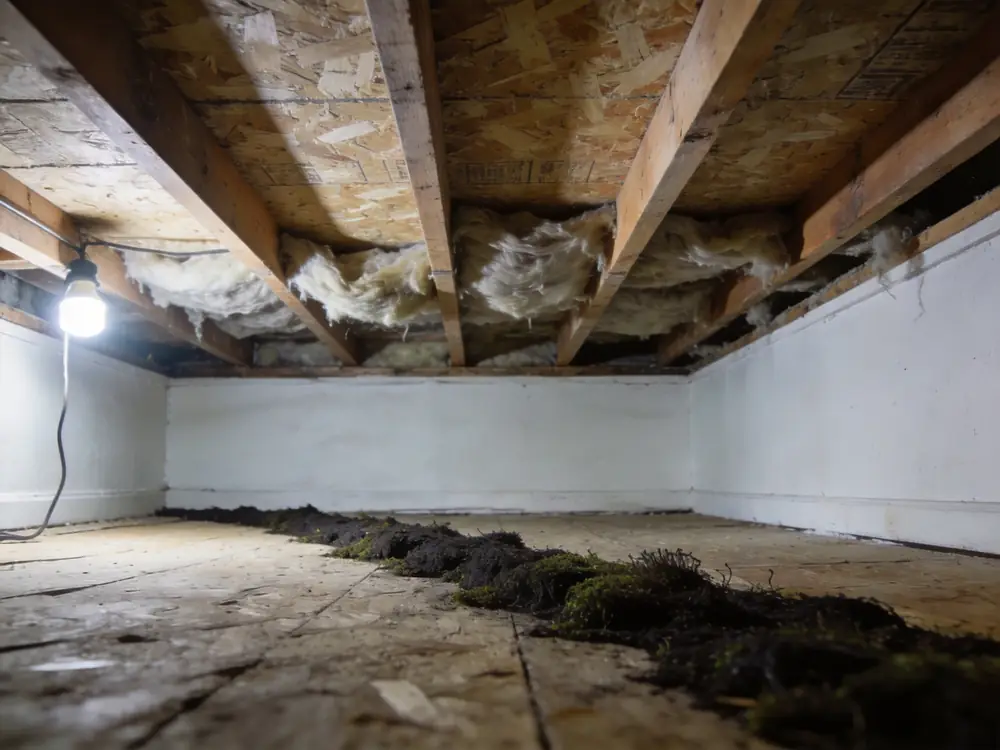
Mold is a fungus that grows from spores when it finds moisture and organic food. On a basement wall, that food is usually dust, dirt, paint, paper-faced drywall or wood nearby. Mold can be white, gray, green, black or other colors. Some basement molds look white and fuzzy, which is why the two are easy to confuse.
Efflorescence vs. Mold: Side-by-Side Comparison
| Feature | Efflorescence | Mold |
|---|---|---|
| Color | White to off-white, sometimes gray | White, gray, green, black, brown or other |
| Texture | Crystalline, crusty or powdery | Fuzzy, slimy or cottony; may be flat and spotty |
| Where it grows | Only on masonry: concrete, block, brick, stone, mortar | Anything organic: wood, drywall, paper, fabric, dust |
| Water test | Dissolves or softens | Does not dissolve |
| Rub test (dry) | Crumbles to a fine powder | Smears or smudges |
| Smell | None | Often musty or earthy |
| Health concern | Not a health hazard | Can trigger allergy and asthma symptoms |
| Spreads to wood? | No | Yes |
How to Test It Yourself
- Look at the surface. If the white growth is only on bare stone, block or concrete, it leans toward efflorescence. If it's on wood, drywall, boxes or furniture, it's likely mold.
- Do the water test. Put a few drops of water on the deposit. Salt will dissolve or soften within a minute. Mold will stay put.
- Do the rub test. With a gloved hand, rub a dry sample between your fingers. Efflorescence turns into a gritty powder. Mold smears.
- Smell it. A musty odor points to mold.
- Check the pattern. Efflorescence often forms in horizontal bands or along mortar joints where water exits. Mold tends to grow in round, spotty colonies.
Wear gloves and a mask when you handle unknown growth. If you still aren't sure, a professional inspection or lab sample can settle it.
Why Efflorescence Still Matters
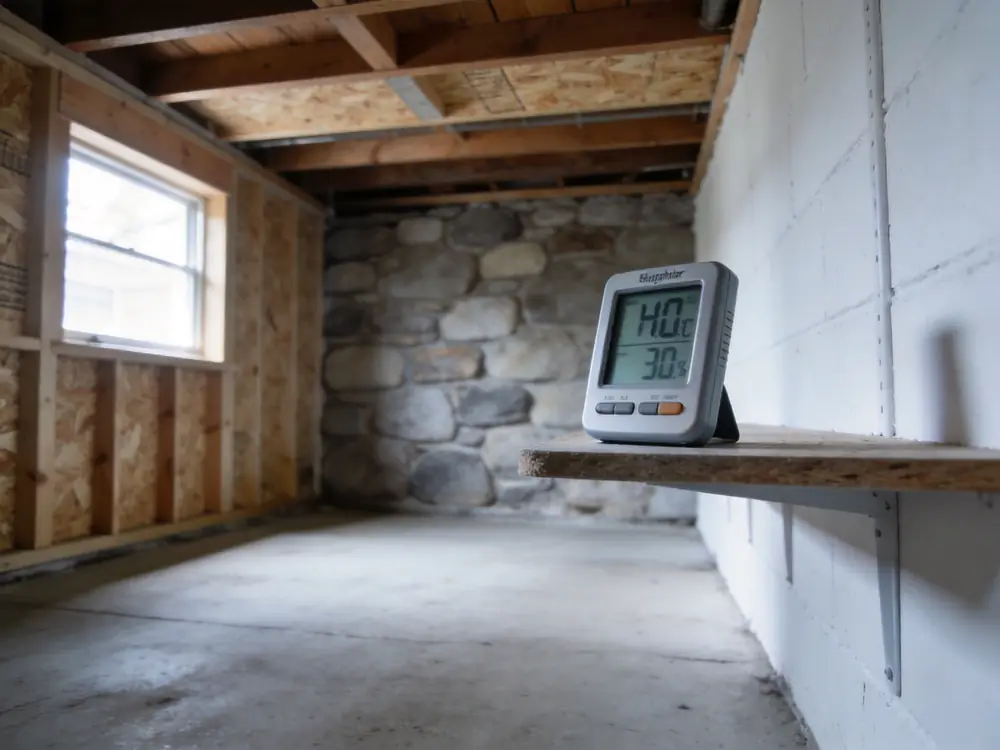
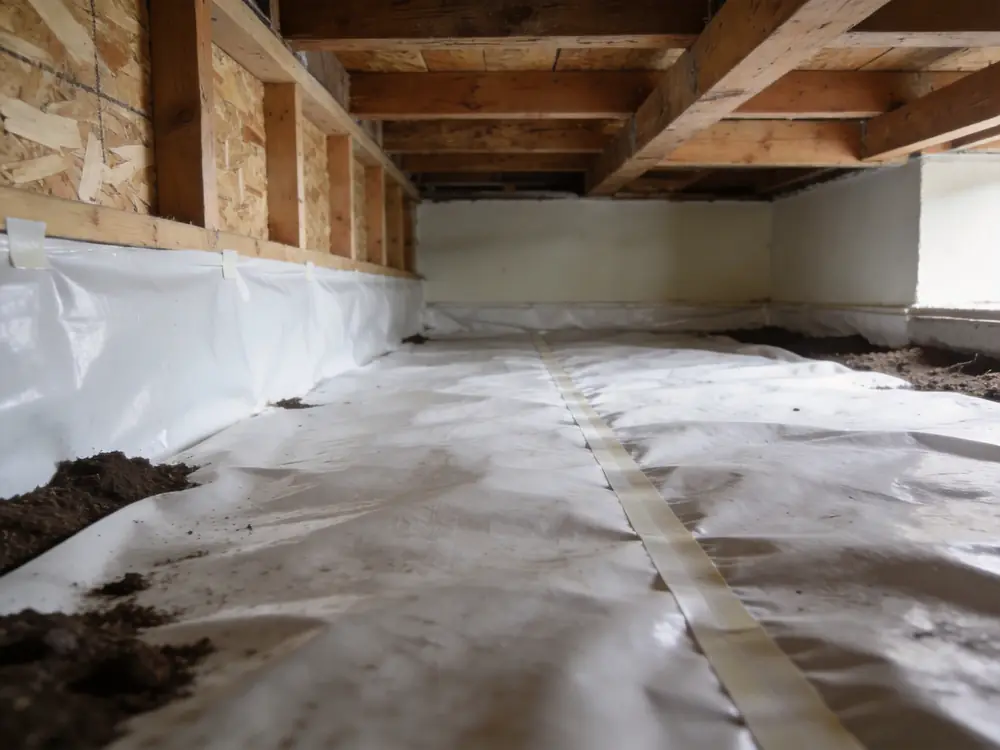
Efflorescence is harmless in itself, but it is a sign that water is moving through your foundation. That same moisture raises basement humidity and can feed mold on joists, sill plates, drywall and stored items. The EPA recommends keeping indoor relative humidity below 60%, ideally 30% to 50%, to limit mold growth.
Heavy, repeated efflorescence can also point to problems worth fixing: clogged gutters, short downspouts, soil sloping toward the house, or a high water table in spring. On historic stone walls, constant salt deposits can slowly weaken soft lime mortar. For more on older foundations, see our guide on mold in stone foundation basements.
How to Remove Efflorescence
- Brush it off with a stiff, dry nylon brush and vacuum the dust.
- Avoid soaking the wall with water, which can dissolve more salts and bring them back.
- Skip harsh acids on historic stone and lime mortar.
- Fix the water source outside: gutters, downspouts and grading.
- Run a dehumidifier to keep the basement below 60% relative humidity.
Don't cover efflorescence with waterproof paint. The salt will push the paint off, and sealing old masonry can trap moisture inside it.
When to Call a Professional
If your test points to mold, if growth covers more than about 10 square feet, or if it's on wood framing or drywall, it's time for professional help. The EPA's mold resources use that 10 square foot mark as a rough line for larger jobs.
We provide basement and crawl space mold remediation in Gettysburg, including moisture control for old stone and block foundations. If you're budgeting, our guide to basement mold remediation cost lists typical price ranges. Call (717) 420-8919, 24 hours a day.
If that is the situation at your property, see basement and crawl space mold remediation.