
Mold guide
Mold in a Finished Basement: Carpet, Drywall and Paneling
Mold in a finished basement is harder to spot than mold in an open one, because drywall, carpet, paneling and insulation cover the cold, damp foundation where it grows. In Gettysburg, where many basements sit against stone or block walls and summers are humid, finished spaces often hide growth for months. Here are the warning signs, what has to come out, and how to rebuild so it stays dry.

By Dale Hoffman, Remediation Lead
Published
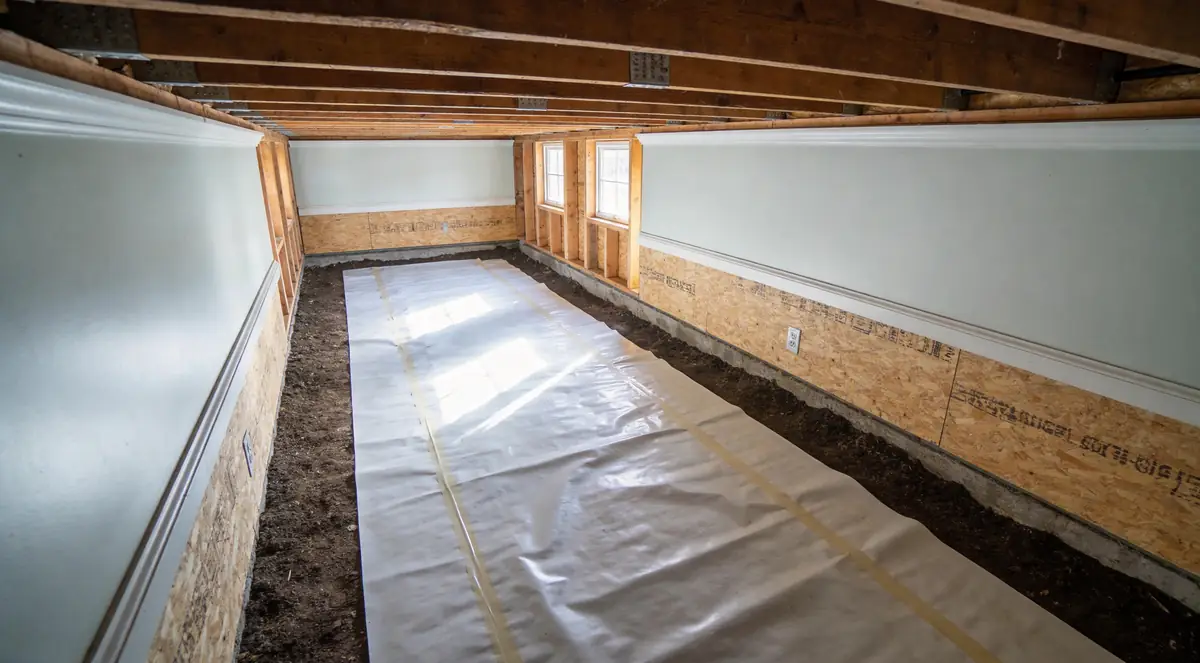
Why Finished Basements Grow Hidden Mold
A foundation wall is cool and often damp. When you frame a wall and hang drywall in front of it, you create a closed cavity. Warm, humid basement air seeps in, hits the cold foundation and condenses. Moisture can also wick through the masonry from the soil outside. With nowhere to dry, that cavity becomes a steady source of moisture for the paper face of the drywall, the wood studs and the insulation.
Common triggers in Gettysburg homes:
If it needs containment and HEPA filtration, mold remediation across Adams County handles that.
- Fieldstone or rubble foundations in older homes that pass ground moisture freely
- Block walls with no exterior waterproofing
- Carpet laid directly over a slab with no moisture break
- Fiberglass batts and plastic sheeting installed tight to the foundation
- Spring snowmelt and heavy rain raising the water table
- A sump pump that fails during a storm
- Humid July and August air with no dehumidifier running
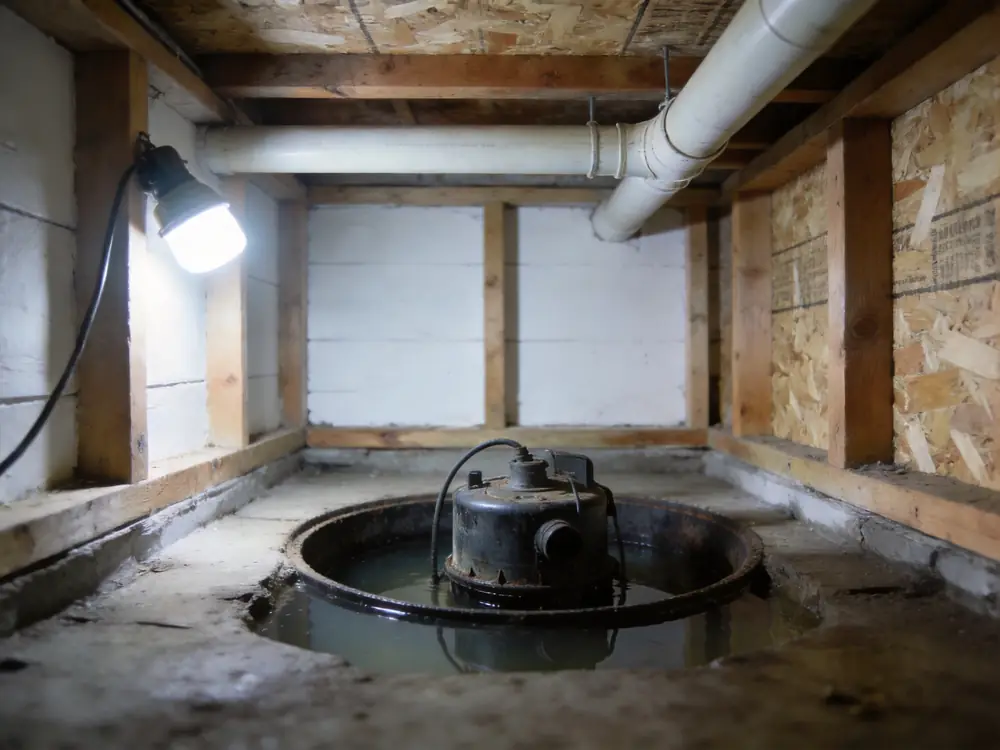
Warning Signs of Mold in a Finished Basement
- A musty smell that gets stronger when the basement is closed up or after rain
- Stains, spots or discoloration on the lower 1 to 2 feet of drywall
- Peeling paint, bubbling or soft drywall near the floor
- Swollen or stained baseboards and trim
- Damp or cool carpet, or a dark ring on the pad when you lift a corner
- Warped wood paneling or dark growth behind it
- Allergy-like symptoms that are worse in the basement
The CDC notes that mold can cause stuffy nose, wheezing, and itchy eyes or skin in sensitive people. If you have health concerns, talk with your doctor. The CDC's mold page has more detail.
What Must Be Removed and What Can Be Cleaned
The EPA advises that porous materials with mold growth, such as drywall and carpet, may need to be thrown away because mold can grow into their empty spaces and crevices. Here is how common finished-basement materials usually fare:
| Material | Usual outcome | Why |
|---|---|---|
| Drywall with visible growth | Remove | Mold feeds on the paper face and grows into the core |
| Carpet and pad | Remove | Pad holds moisture; growth is hard to reach |
| Fiberglass batt insulation | Remove | Traps spores and moisture; cheap to replace |
| Wood paneling | Often remove | Thin panels warp; the back side is hard to clean |
| Wood studs and plates | Usually clean | Solid wood with surface growth can be cleaned and dried |
| Concrete, block or stone walls | Clean | Non-porous or masonry surfaces can be cleaned |
| Vinyl or tile flooring | Depends | Check underneath; moisture can be trapped below |
Professionals usually cut drywall a foot or two above the visible damage to find the full extent. It's common to discover more growth inside the cavity than you saw on the surface.
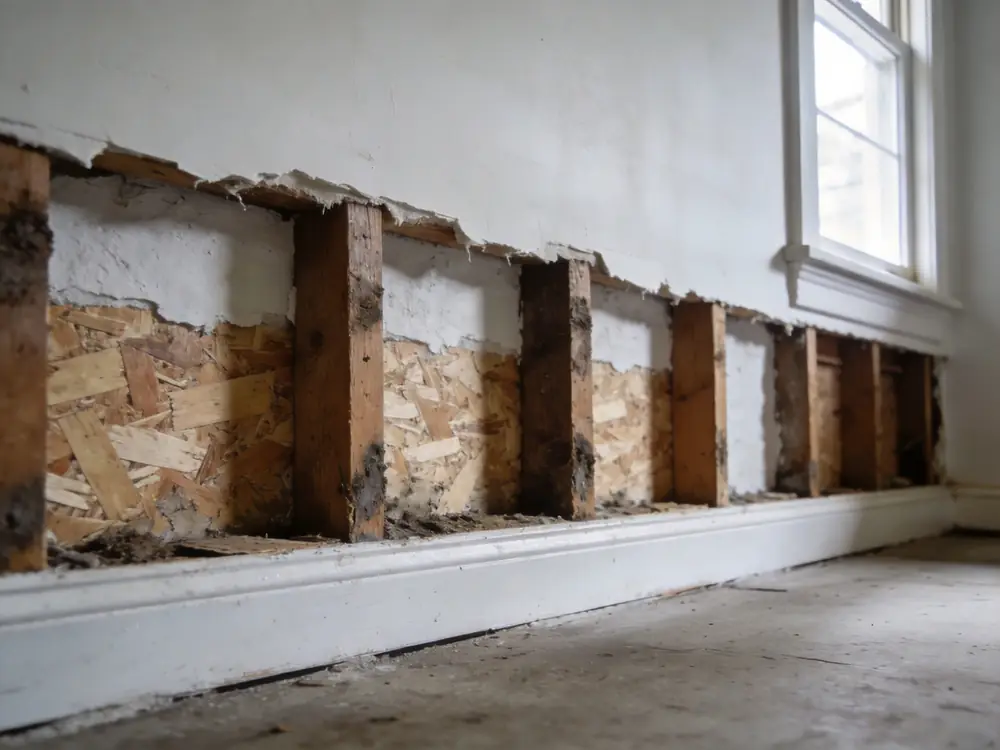
How Finished Basement Remediation Works
- Find the moisture source. Seepage, condensation, a plumbing leak or a flood event.
- Contain the area. Plastic walls and negative air keep spores from spreading upstairs.
- Remove damaged materials. Drywall, carpet, pad, insulation and paneling are bagged inside containment.
- Clean framing and walls. HEPA vacuum, scrub and treat the studs, plates and foundation.
- Dry. Dehumidifiers and air movers bring materials down to normal moisture levels.
- Verify. We recommend independent clearance testing before rebuilding.
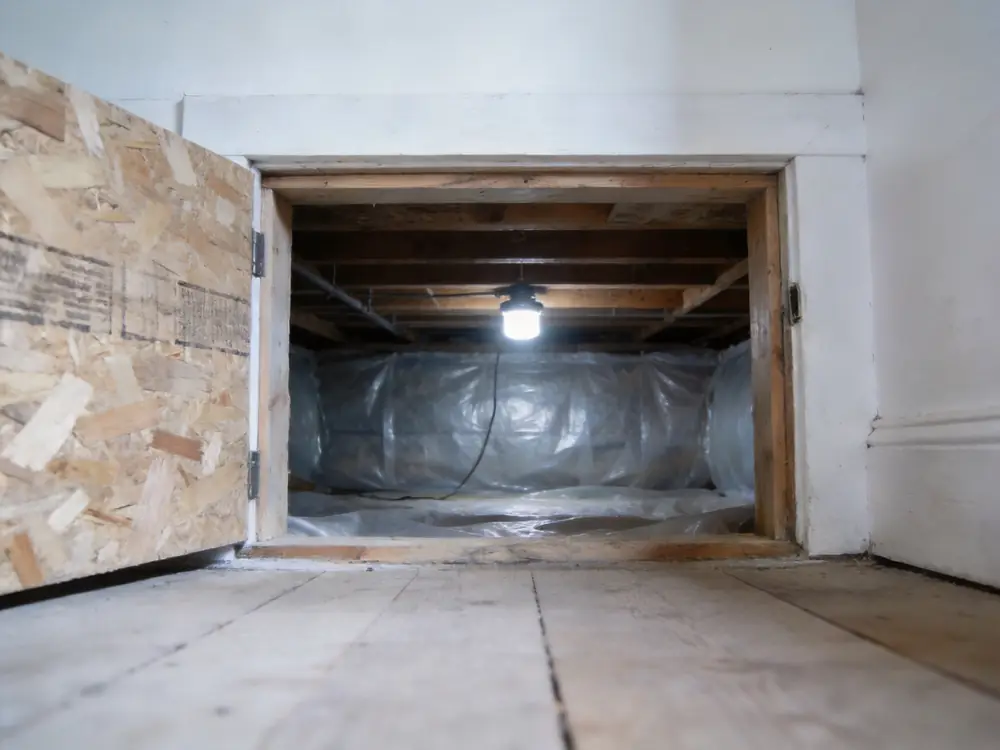
How to Rebuild a Finished Basement Dry
- Fix water first. Gutters, downspouts, grading and a working sump pump with a battery backup.
- Insulate with rigid foam against the foundation instead of fiberglass batts and plastic sheeting, or leave an air gap.
- Use a pressure-treated bottom plate and keep it off the slab with a sill gasket.
- Choose moisture-tolerant materials such as paperless or mold-resistant drywall near the floor.
- Pick flooring that tolerates damp, like vinyl plank or tile, over wall-to-wall carpet.
- Keep humidity below 60% with a dehumidifier. See our guide to the ideal basement humidity to prevent mold.
In older Gettysburg homes with fieldstone foundations, many owners keep the stone exposed rather than framing over it. If you do finish, leave the wall able to dry. Our guide on mold in stone foundation basements explains why.
Floods and Pump Failures
A finished basement that takes on water needs fast action. The EPA says wet materials should be dried within 24 to 48 hours to prevent mold. Carpet pad and drywall soaked by flood water usually need to come out. Our article on sump pump failure and mold covers the first steps after a basement floods.
When to Call a Professional
Call a professional if you suspect mold behind finished walls, if the affected area is larger than about 10 square feet, or if the basement flooded. We handle basement and crawl space mold remediation in Gettysburg, including finished spaces. Call (717) 420-8919, 24 hours a day.