
Mold guide
How Mold Inspectors Find Hidden Moisture
Mold inspectors find moisture by combining three tools: moisture meters that measure how wet a material is, thermal imaging cameras that show temperature patterns where water may be hiding, and hygrometers that measure humidity in the air. In Gettysburg homes, where water often hides behind plaster, under floors, and in stone basements, these tools find wet materials long before mold becomes visible.

By Paula Reinhart, Inspection and Testing Lead
Published
Why Moisture Comes First
Mold needs water to grow. According to the EPA, the key to mold control is moisture control, and mold can begin growing on wet materials within 24 to 48 hours. Finding the moisture tells an inspector where mold is likely growing now and where it will grow next. Fixing the moisture is also the only way to keep mold from coming back after cleanup.
Tool 1: Moisture Meters
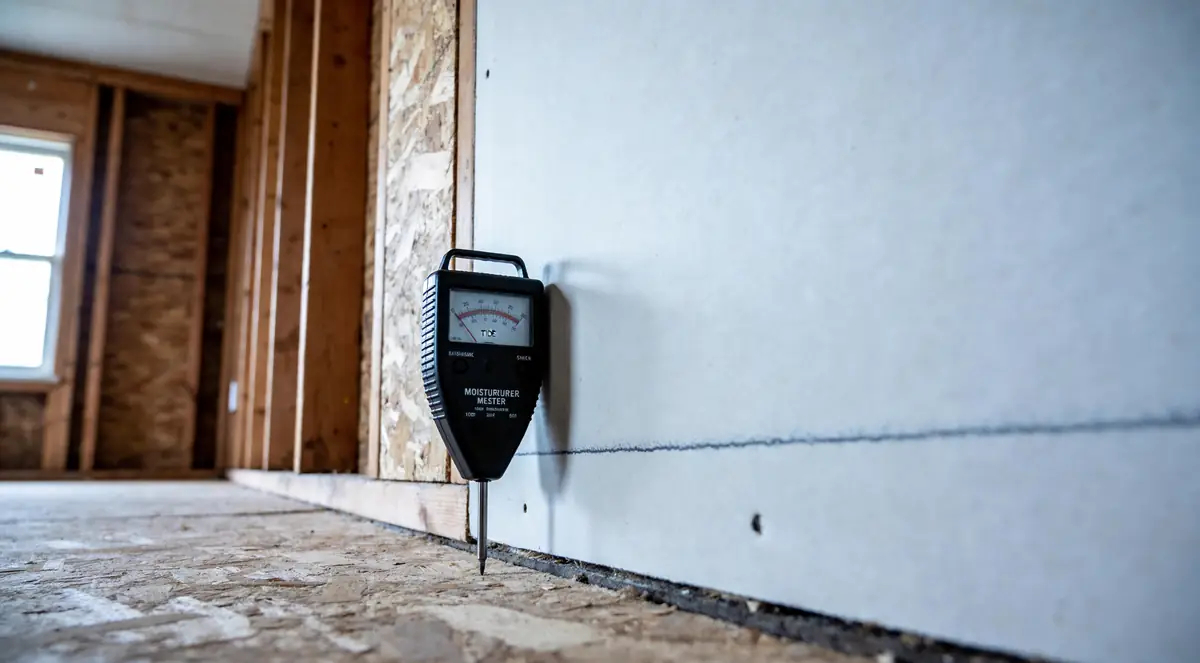
Moisture meters measure the water content of building materials. There are two main types.
When it is past the point of a bucket and a fan, the team here can scope the job.
Pin meters
Two small metal pins are pushed into the material. The meter measures electrical resistance between them, since wet materials conduct electricity better than dry ones. Pin meters give a reading at a specific depth and are good for wood framing, trim, and subflooring. Many meters show wood readings as a moisture content percentage.
Pinless meters
A flat sensor pad is pressed against the surface and reads moisture below it without leaving holes. Pinless meters are fast and good for scanning drywall, plaster, tile, and finished floors. They give relative readings, so inspectors compare a suspect area to a known dry area of the same material.
What the readings mean
Every material has its own normal range, so inspectors compare readings to dry reference spots. For wood, most indoor framing in a heated home reads well below 15%. Readings that climb toward 20% and above mean the wood is wet enough to support mold and, over time, decay.
Tool 2: Thermal Imaging Cameras
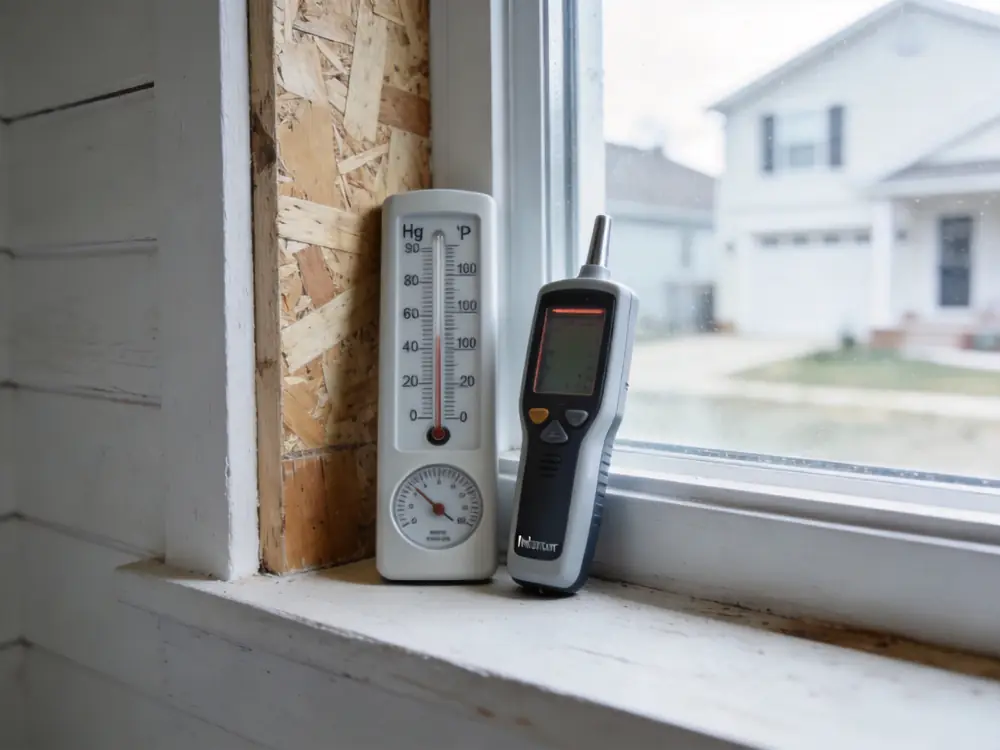
A thermal (infrared) camera shows surface temperature as a color image. It doesn't see water directly. It sees the cooling effect water has as it evaporates, and the way wet materials hold temperature differently than dry ones.
Thermal cameras are useful for:
- Scanning whole walls and ceilings in seconds to find suspicious spots.
- Tracing a leak from its visible stain back to the source.
- Finding missing or wet insulation in walls and attics.
- Spotting cold areas where condensation is likely to form.
The catch: cold spots can also come from air leaks, missing insulation, or ductwork. That's why every suspicious thermal image is checked with a moisture meter. A thermal camera tells the inspector where to look; the meter confirms what's there.
Tool 3: Hygrometers and Dew Point
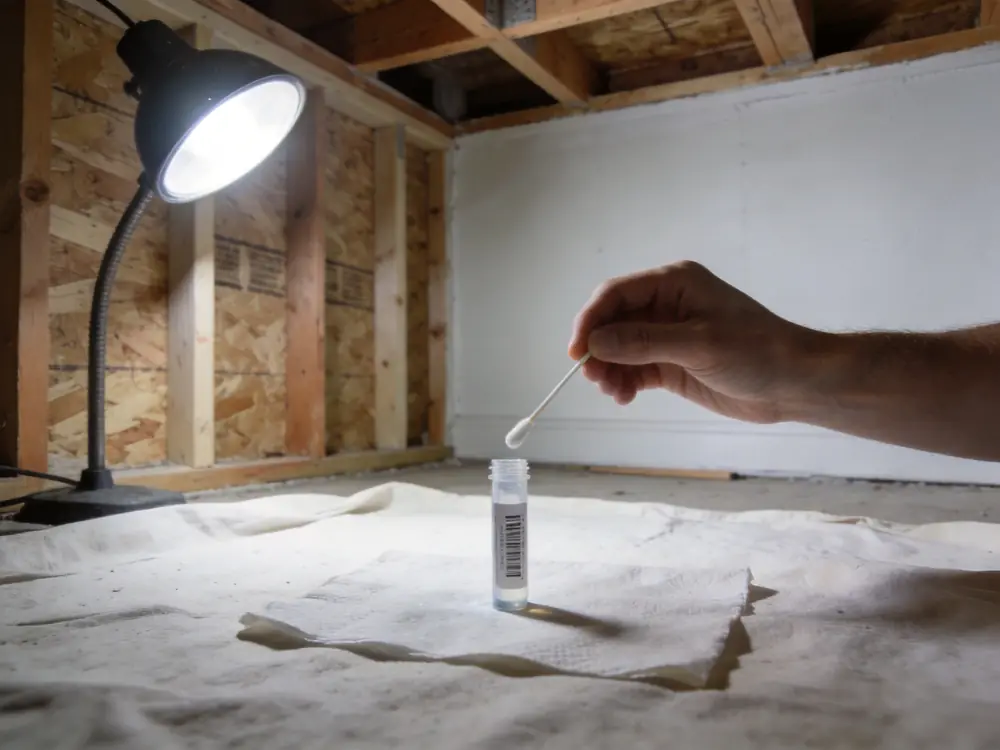
A hygrometer (also called a thermo-hygrometer) measures air temperature and relative humidity. From those, an inspector calculates the dew point, the temperature at which moisture in the air will condense on a surface.
This matters because many mold problems don't come from leaks at all. They come from humid air meeting cool surfaces, like basement walls in July or ductwork running through a hot attic. The EPA recommends keeping indoor humidity below 60%, ideally 30% to 50%. Readings above that in a basement or crawl space point to a humidity problem even when no leak exists.
Other Tools Inspectors Use
- Borescope: a small camera on a flexible cable that looks inside a wall cavity through a small hole, to confirm growth without opening the wall.
- Flashlight and mirror: still essential for looking behind appliances, under sinks, and into dark crawl spaces.
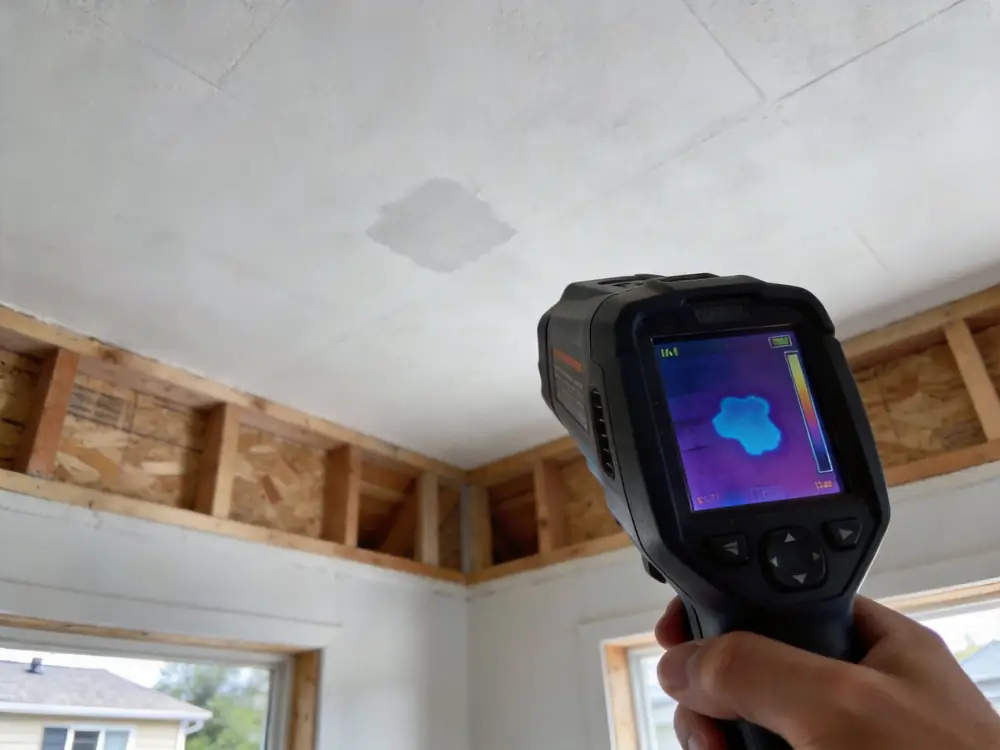
- Air sampling pump: used after moisture mapping when a lab sample will answer a question.
Moisture Tools at a Glance
| Tool | What it measures | Best for | Limits |
|---|---|---|---|
| Pin moisture meter | Moisture in a material at pin depth | Wood framing, trim, subfloor | Leaves small holes; one spot at a time |
| Pinless moisture meter | Relative moisture below a surface | Drywall, plaster, tile, floors | Relative readings; needs a dry reference |
| Thermal camera | Surface temperature patterns | Scanning large areas fast | Doesn't detect water directly; needs meter confirmation |
| Hygrometer | Air humidity and temperature, dew point | Basements, crawl spaces, attics | Measures air, not materials |
| Borescope | Visual view inside cavities | Confirming hidden growth | Needs a small access hole |
How This Works in Gettysburg Homes
Older Gettysburg houses create special challenges. Plaster walls are thick and dense, so pinless meters read them differently than drywall, and inspectors need good dry reference points in the same room. Fieldstone foundation walls are naturally damp, so the focus shifts to the wood touching them: sill plates, joist ends, and stored items. Attics with bathroom fans vented into them often show wet sheathing on thermal scans in winter. And the region's humid summers mean dew point readings in basements often explain growth that has no leak behind it at all.
When to Call a Professional
If you've had a leak, see a stain, or smell something musty, moisture mapping is the fastest way to find out what's going on behind the surface. Our mold inspection and testing service includes meter readings, thermal imaging, and humidity checks on every visit. Call (717) 420-8919 any time, day or night.
If that is the situation at your property, see mold inspection and testing in Gettysburg.