
Mold guide
How to Find a Hidden Water Leak Before It Turns Into Mold
The fastest way to confirm a hidden water leak is the water meter test: shut off every fixture, read the meter, and check it again after two hours. If it moved, water is escaping somewhere. From there, a room-by-room search for stains, soft spots, musty smells and high moisture readings narrows down where, and thermal imaging can show what you cannot see.

By Paula Reinhart, Inspection and Testing Lead
Published
Why Hidden Leaks Lead to Mold
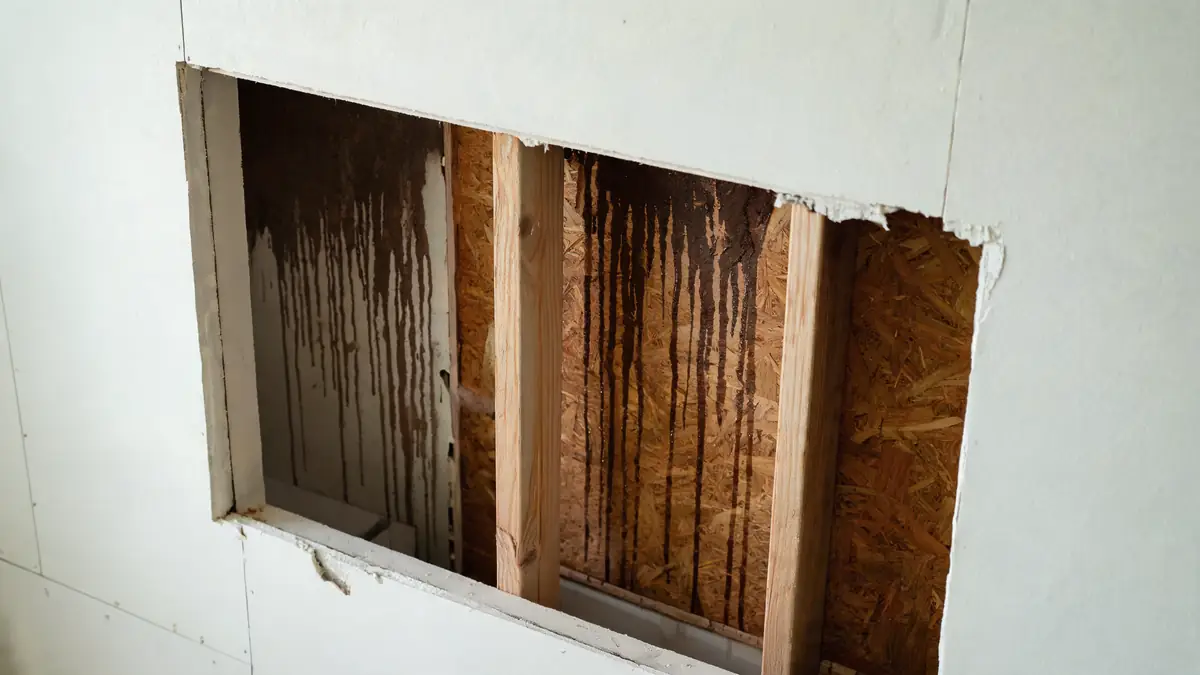
A hidden leak is dangerous because it is slow and out of sight. A small drip inside a wall can keep drywall, insulation and framing wet for weeks or months before any stain reaches the surface.
Mold does not need much time. The EPA says to dry water-damaged areas within 24 to 48 hours to prevent mold growth. A hidden leak is wet far longer than that, so growth is likely by the time you notice it.
Finding the leak early saves money in two ways. You stop the water bill and the structural damage, and you limit how much material has to come out later.
Step 1: Do the Water Meter Test
The water meter test tells you whether the supply side of your plumbing is leaking. It is free and takes about two hours.
- Turn off all water use. Close faucets, stop the dishwasher and washing machine, and make sure no one flushes. Turn off the ice maker and any irrigation.
- Find your meter. In the Gettysburg borough and most developments it is in the basement, a utility room or a pit near the curb.
- Read and record it. Take a photo of the dials. Many meters also have a small leak indicator, often a triangle or star, that spins when any water flows.
- Wait two hours. Do not use any water.
- Read it again. If the number changed, water is leaving the system.
This is the method the EPA WaterSense program recommends. The same page suggests a toilet dye test, covered below.
Narrow it down with the main shutoff
If the meter moved, close the main shutoff valve inside the house and repeat the test. If the meter still moves with the house valve closed, the leak is in the underground service line between the meter and the house. If it stops, the leak is inside.
On well water
Many homes in rural Adams County run on private wells, so there is no meter. With all water off, listen for the well pump and watch the pressure gauge on the tank. A pump that cycles on, or pressure that drops slowly, means water is escaping.
Warning Signs of a Hidden Leak
- A water bill that rises with no change in use
- The sound of running or dripping water when everything is off
- Yellow or brown stains on ceilings and walls
- Paint that bubbles, peels or cracks
- Wallpaper that lifts at the seams
- Warped, cupped or soft flooring
- Baseboards that swell or pull away from the wall
- A musty smell in one room or closet
- Mold spots on walls, ceilings or the backs of cabinets
- A wet patch of lawn or soft soil over the service line in dry weather
Some leaks do not show on the meter at all. Drain line leaks, roof leaks and foundation seepage only happen when water flows or rain falls. The signs above catch those too. Our guide to signs of hidden mold covers what to look for when the leak has already done damage.
Step 2: Check Room by Room
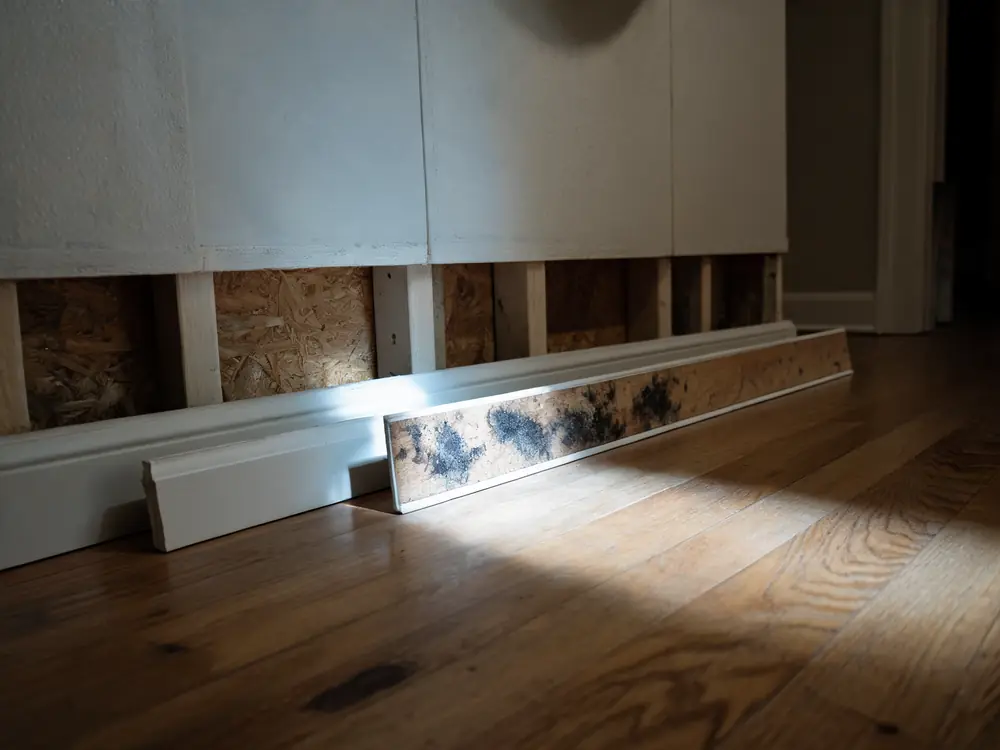
Use a flashlight, your nose and, if you have one, a moisture meter. Check slowly and write down what you find.
Bathrooms
- Toilet dye test: add a few drops of food coloring to the tank. If color shows in the bowl within about 10 minutes without flushing, the flapper is leaking. Flush afterward so the tank does not stain.
- Rock the toilet gently. Movement or a soft floor around the base points to a failed wax ring.
- Check grout and caulk around the tub and shower. Gaps let water into the wall behind.
- Look at the ceiling below the bathroom for stains.
Kitchen and laundry
- Empty the sink base and check the cabinet floor for stains, swelling or a musty smell.
- Pull the refrigerator out and check the ice maker line and the floor beneath.
- Check the dishwasher supply and drain connections at the sink cabinet.
- Inspect washing machine hoses for bulges and the floor behind the machine.
Sink cabinets are one of the most common hidden leak spots. See our guide to mold under the kitchen sink.
Basement and crawl space
- Follow the supply pipes from the meter and look for drips, green or white crust at fittings, and wet insulation.
- Check the water heater base and the relief valve drain.
- Look at foundation walls after rain, especially near window wells and downspouts.
- Check the sump pit and pump operation.
Attic and ceilings
- After rain, check the attic around chimneys, vent pipes and skylights for wet sheathing.
- Look for stains on rafters and insulation below roof penetrations.
- Check bath fan ducts for condensation dripping back down.
Roof leaks often show up far from where water enters, because water runs along rafters before it drips. Our guide to ceiling mold from a roof leak explains how to trace it.
Step 3: Use Moisture Meters and Thermal Imaging
Moisture meters
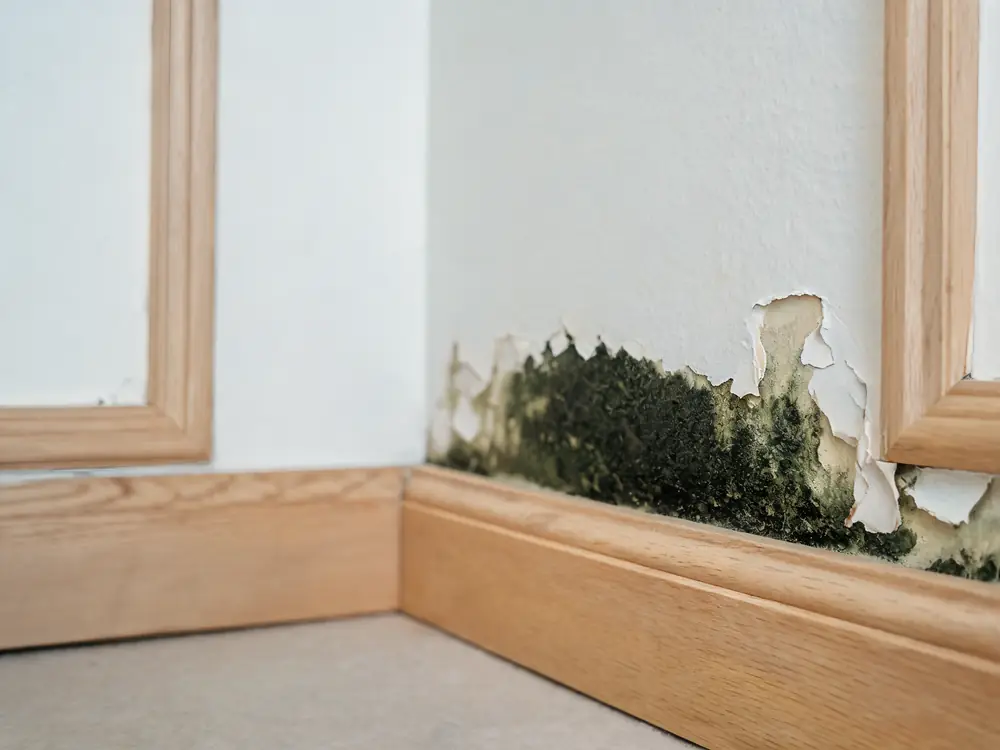
A moisture meter confirms what your eyes suspect. Take readings on a suspect wall and compare them with the same material in a dry room. Readings that rise as you move toward one spot point to the source.
Different meters use different scales, so compare readings from one meter only. Our guide to reading moisture meter numbers explains what the numbers mean on drywall, wood and concrete.
Thermal imaging
A thermal camera shows surface temperature, not water. Wet materials often show up cooler than dry ones, because evaporation cools them. That makes thermal imaging a fast way to scan walls and ceilings for patterns that suggest a leak.
- Leaks often show as a cool streak running down from a fixture or a cool patch spreading from a pipe.
- Missing insulation, air leaks and cold pipes can look similar, so every thermal finding needs a moisture meter to confirm it.
- Thermal cameras work best when there is a temperature difference between inside and outside.
Phone-attached thermal cameras are affordable, but reading the images takes practice. Professional inspectors pair them with meters before drawing any conclusions.
Leaks the Water Meter Will Not Catch
The meter test only checks pressurized supply lines. Many of the leaks that cause mold never touch the meter, because they only carry water some of the time.
- Drain lines. A cracked drain or loose slip joint leaks only when a sink, tub or washer drains. Run water for a few minutes, then check below with a flashlight.
- Shower pans and tub surrounds. Water gets behind tile only during showers. Look for stains on the ceiling or wall below after a long shower.
- Air conditioner condensate. A clogged drain line or rusted pan overflows only when the system runs. Check around the air handler during summer.
- Window wells and foundation seepage. These only leak during and after rain. Check the basement during a storm, not the day after it clears.
- Roof flashing and chimneys. These leak in wind-driven rain or during snowmelt.
Window wells are a common culprit in Adams County basements. When drains clog with leaves, the well fills like a bucket and water comes in around the window. Our guide to window well leaks and basement mold covers the fix.
Sometimes the only sign is a smell. If a room smells musty and nothing looks wet, see our guide on a musty smell with no visible mold before you start opening walls.
Plumber or Mold Inspector: Who to Call
| Situation | Who to call first |
|---|---|
| Meter moves; you can see an active drip | Plumber |
| Meter moves; no visible source | Plumber with leak detection equipment |
| Meter does not move, but walls or ceilings are stained | Roofer or mold inspector, depending on location |
| Musty smell with no visible water | Mold inspector |
| Leak found and fixed, but materials were wet for days | Mold inspector or remediation contractor |
| Visible mold over about 10 square feet | Remediation contractor |
The two often work together. The plumber stops the water. The mold inspector maps how far the moisture spread and whether growth started. Opening a wall to fix a pipe without checking for mold can spread spores through the house.
If the leak was sudden and large, our guide to mold after a burst pipe covers the first 48 hours.
When to Call a Professional
Call for a mold inspection if a leak ran for more than a day or two, if drywall or flooring is stained or soft, or if a musty smell stays after the leak is fixed. Those are signs that moisture has spread beyond what you can see.
We provide water damage and mold restoration in Gettysburg, Adams County and Hanover, starting with a free inspection that includes moisture meters, a hygrometer and thermal imaging. You get photos, readings and a written scope for your records and your insurer. Call (717) 420-8919, 24 hours a day.