
Mold guide
Flood Insurance and Mold in Adams County: What NFIP Covers and What It Doesn't
Most homeowners policies do not cover flood, and a National Flood Insurance Program (NFIP) policy does not pay for mold you could have prevented by drying out after the water left. Near Marsh Creek, Rock Creek, Conewago Creek and other mapped Adams County streams, check your flood zone, buy coverage at least 30 days ahead, and document everything.

By Curtis Bowman, Water and HVAC Restoration Lead
Published

Homeowners Policy vs Flood Policy
Two different policies cover water damage, and they rarely overlap. Knowing which one applies decides whether mold cleanup has any chance of being covered.
A homeowners policy typically covers sudden, accidental water from inside the house, such as a burst pipe. Most homeowners policies exclude flood, meaning surface water from outside that covers normally dry land. Mold coverage under homeowners policies is often limited or capped. Our guide on whether homeowners insurance covers mold explains the usual exclusions.
Flood insurance is a separate policy. The main source of residential flood coverage is the NFIP, which is managed by FEMA and sold through insurance agents. Some private insurers also sell flood policies with their own terms.
| Situation | Which policy usually responds | Mold coverage |
|---|---|---|
| Burst pipe or appliance leak | Homeowners | Often limited; depends on the policy |
| Sump pump backup | Homeowners, only with a water backup endorsement | Depends on the endorsement |
| Creek or river overflow into the house | Flood (NFIP or private) | Excluded if within your control to prevent |
| Heavy rain runoff across the yard into the basement | Flood, if it meets the policy's flood definition | Excluded if within your control to prevent |
| Slow seepage or long-term humidity | Usually neither | Usually excluded |
Every policy is different. Read yours and ask your agent before you need it.
Private flood policies
Some insurers sell private flood coverage outside the NFIP. These policies can have different limits, deductibles, waiting periods and mold language. If you have one, read the mold, mildew and moisture sections closely and ask how basements are treated. Do not assume it works the same way as an NFIP policy.
How NFIP Treats Mold After a Flood
NFIP policies cover direct physical loss by flood. Mold is treated differently. FEMA's published appeal decisions explain that the standard flood policy excludes mold, mildew and moisture damage that is within the policyholder's control, including failure to inspect and maintain the property after the flood recedes.
In plain terms, the policy expects you to start drying out as soon as you safely can. Mold that grows because a house sat wet for weeks after the water left is likely to be denied.
Coverage questions can depend on the facts, such as whether you could get to the property at all. If floodwater or an official order kept you out, document that clearly and raise it with your adjuster.
What NFIP policies cover in basements
Basements get special limits under NFIP policies. According to FloodSmart, building coverage includes items like furnaces and water heaters, while personal property kept in basements is generally not covered. Finished basement walls, flooring and furniture are common sources of disappointment after a flood claim.
The 30-Day Waiting Period
FloodSmart states that NFIP coverage generally goes into effect 30 days after purchase. There are a few exceptions, such as a policy bought in connection with a mortgage or after certain flood map changes.
For most homeowners, that means you cannot wait for a forecast. If remnants of a tropical storm are headed toward south central Pennsylvania, a policy bought that week will not cover that storm.
Policies also need to be renewed on time. A lapse can restart the waiting period.
The best time to review flood coverage is in the dry months, well before spring thaw and the summer and fall storm season. Ask your agent for a quote on both building and contents coverage, since they are typically purchased separately.
How to Check Your Flood Zone
FEMA publishes flood maps for every county that participates in the NFIP. You can look up your own address in a few minutes.
- Go to the FEMA Flood Map Service Center.
- Type your street address into the search box.
- Open the dynamic map or the flood map panel for your area.
- Find your home and note the zone label.
- Zones beginning with A, such as A and AE, are Special Flood Hazard Areas, the areas with a 1 percent annual chance of flooding.
- Zone X areas are lower risk, but floods still happen there.
Flood maps show the risk FEMA has studied, not every place water can go. Small tributaries, storm drains and low spots in a yard can flood a basement in a heavy storm, even in Zone X. Low risk does not mean no risk.
If you are unsure how to read the map, your township or borough office can usually help. Lenders require flood insurance for many mortgages on homes in Special Flood Hazard Areas, but homeowners outside those zones can buy coverage too.
Adams County Streams With Mapped Floodplains
FEMA's countywide Flood Insurance Study for Adams County (revised July 22, 2020) lists dozens of flooding sources. The study's list of flooding sources includes streams many local homeowners will know:
- Marsh Creek and Little Marsh Creek, west and southwest of Gettysburg
- Rock Creek, east of the borough, mapped as Zone AE
- Stevens Run and Willoughby Run near Gettysburg
- Conewago Creek and South Branch Conewago Creek in the northern and eastern county
- Bermudian Creek, Latimore Creek and Opossum Creek
- Middle Creek, Toms Creek, Alloway Creek and Plum Run
The same study notes that the Boroughs of Biglerville and New Oxford had no Special Flood Hazard Areas identified. That does not mean homes there cannot flood. Flash flooding and basement water happen well outside mapped zones.
Conewago Creek has a long flood history in communities along its banks, including East Berlin. If you live near any of these streams, check the map for your exact address rather than assuming.
The First 48 Hours After the Water Recedes
What you do in the first two days shapes both the mold outcome and the claim. Safety comes first: stay out if there is any chance of electrical hazards, structural damage or sewage.
- Call your insurance agent or flood insurer to report the loss.
- Photograph and video everything before moving it.
- Pump or vacuum out standing water.
- Pull out wet carpet, pad and cardboard, and set them aside for the adjuster if asked.
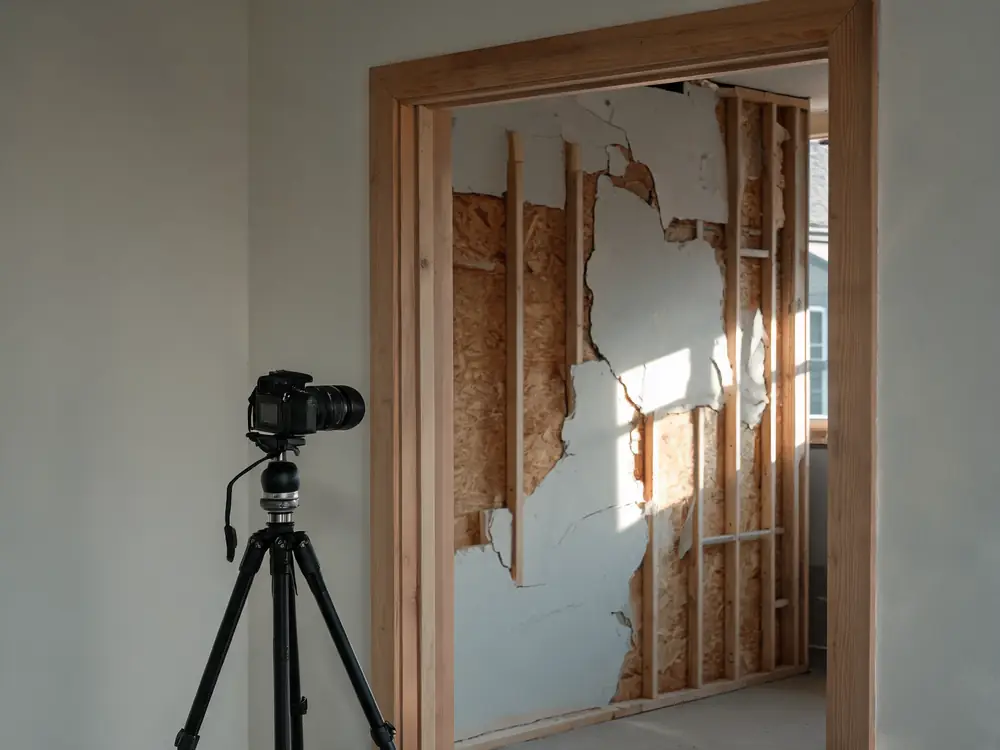
- Cut out soaked drywall and insulation above the water line so wall cavities can dry.
- Run dehumidifiers and fans, and keep running them until materials read dry.
- Save every receipt for equipment, supplies and labor.
Our guide on how fast mold grows after water damage explains why speed matters so much.
Ways to lower your risk before the next flood
- Ask your agent about a water backup endorsement for sump and drain backups.
- Raise the furnace, water heater and electrical panel if they sit low in a flood-prone basement.
- Store valuables and papers off the basement floor, in plastic bins.
- Keep gutters clean and grade soil away from the foundation.
- Check the flood map again after any map update for your township.
Documentation After a Flood
Good records support your claim and protect against a mold denial. Start before you move anything, as long as it is safe.
- Photos and video of the water line on walls, standing water and every damaged room.
- Close-ups of model and serial numbers on furnaces, water heaters, washers and dryers.
- A written list of damaged items, with approximate age and value.
- Samples of carpet, flooring and drywall if your adjuster asks for them.
- Dates and times of when water arrived, when it receded and when you could get back inside.
- Drying records: receipts for fans, dehumidifiers and pumps, plus moisture readings.
- Contractor paperwork: written scopes, photos and moisture maps from any professionals.
Our guide on filing a mold insurance claim walks through the claim process step by step. For cleanup itself, see mold after flooding and which belongings can be saved.
Keep copies of everything in one folder, paper or digital. Adjusters may change during a large flood, and a complete file saves you from starting over. Write down the name of every person you speak with and the date of each call.
The EPA's general guidance is to dry wet materials within 24 to 48 hours. After a creek flood, that can be hard. Get water out, remove soaked carpet and drywall, and run dehumidifiers as soon as it is safe to do so.
When to Call a Professional
Call quickly after any flood that soaked drywall, carpet or insulation, or that came from a creek or sewer. Fast action limits mold and gives your adjuster a clear record. We provide flood drying and mold restoration across Gettysburg and Adams County, with moisture readings, photos and a written scope for your insurance file. Call (717) 420-8919, 24 hours a day.