Why Ductless and Window Units Grow Mold
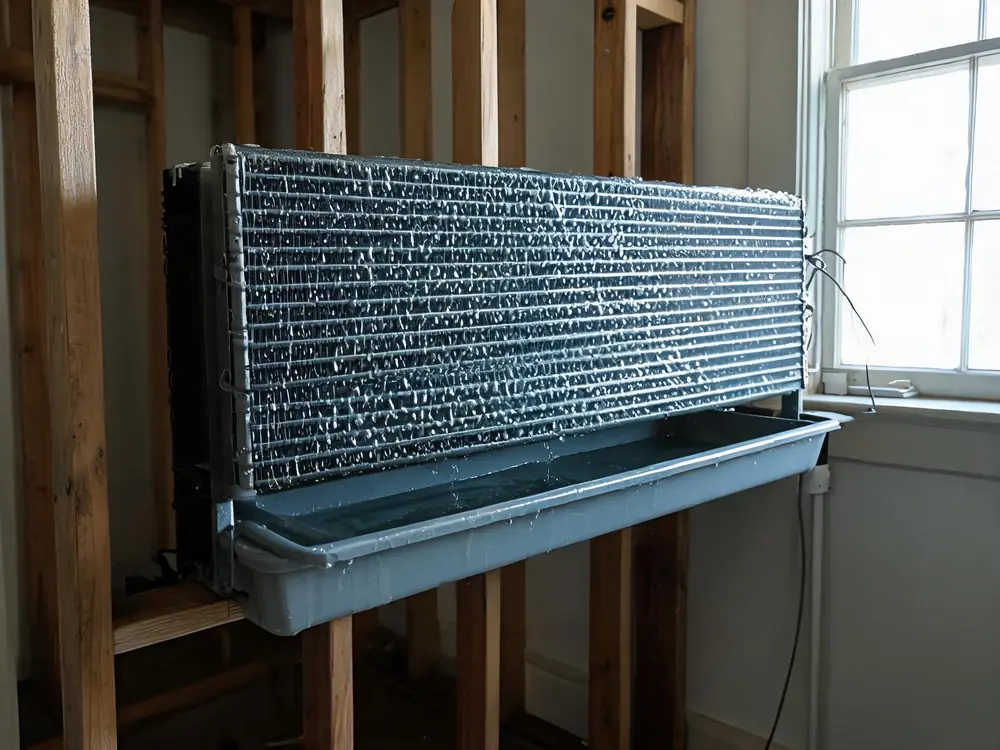
Every air conditioner removes humidity by passing air over a cold coil. Water condenses on the coil and drains away. In a ductless mini-split, the coil, drain tray and blower wheel are all packed into a small wall or ceiling unit, right in the room. In a window unit, water collects in the base pan. Add dust from the room, darkness and hours of daily moisture, and mold has everything it needs.
Several habits make it worse:
For how this plays out locally, see mold remediation services in Gettysburg.
- Running the unit in "dry" or low fan mode for long hours, which keeps surfaces wet
- Turning the unit off right after cooling, so the coil stays wet in a closed box
- Dirty or skipped filters, which let dust coat the coil and wheel
- Oversized units that short-cycle and never dry out fully
- A clogged condensate line or tilted window unit that holds water
How to Spot Mold in a Mini-Split
- Turn off power at the unit and the disconnect.
- Open the front cover and remove the filters. Check them for dark spots and a musty smell.
- Shine a flashlight into the air outlet below the louvers. The long, curved blower wheel (squirrel cage) is where mold is most often found. Black dots or a gray-black coating on the blades is a strong sign.
- Look at the louvers and the housing around the outlet for spots.
- Notice the smell in the first minutes of operation.
With window units, remove the front grille and filter and look at the coil face and the base pan. Standing water and slime in the pan are common.
What You Can Clean Yourself
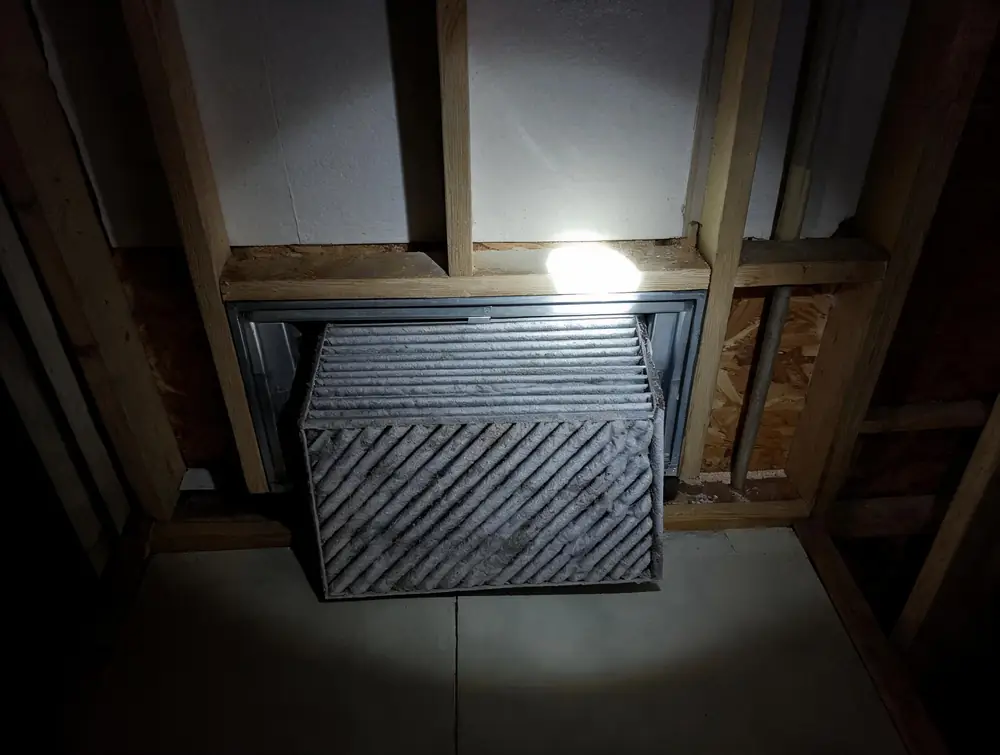
- Wash the filters every few weeks during cooling season and let them dry fully.
- Wipe the louvers and front housing with mild soap and water.
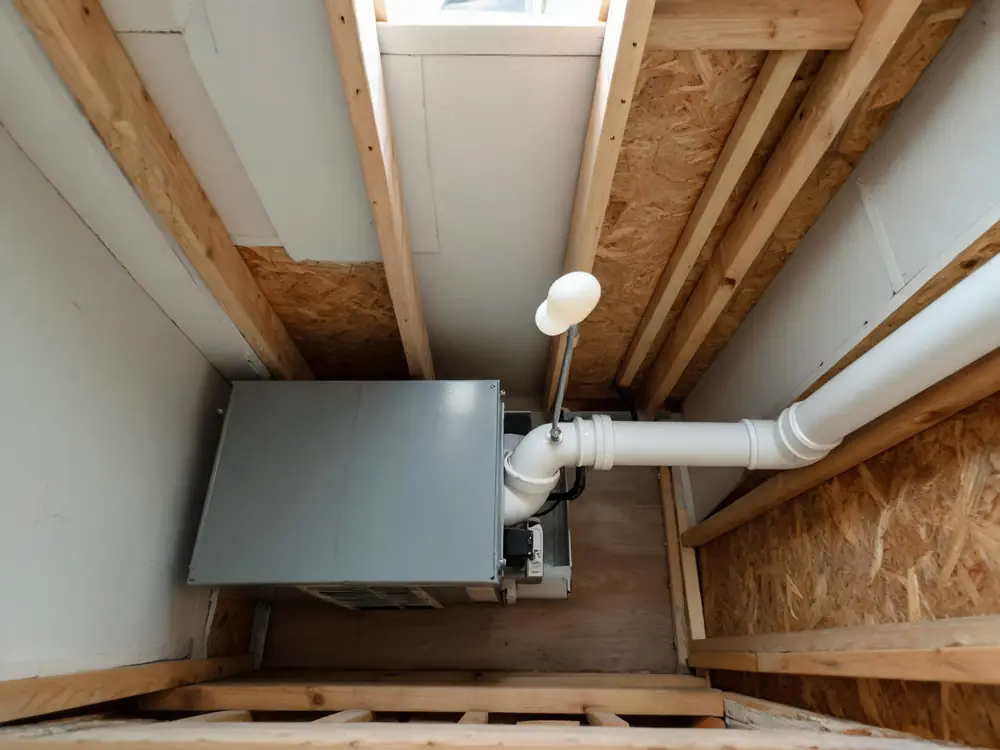
- Keep the condensate line clear and make sure water drains outside.
- For window units, make sure the unit tilts slightly outward so water drains, and keep the base pan clean.
Avoid spraying bleach or harsh cleaners into the unit. They can damage coils and electronics and don't remove mold from the blower wheel. Many manufacturers also void warranties for improper cleaning, so check your manual.
When a Deep Clean Is Needed
Once mold is on the blower wheel or deep in the coil, surface wiping won't reach it. A professional deep clean usually includes:
- Protecting the wall and floor and hanging a cleaning bag under the head to catch runoff
- Removing covers, louvers and, when needed, the drain tray and blower wheel
- Cleaning the coil and wheel with a coil-safe cleaner and low-pressure rinse
- Clearing and treating the drain tray and line
- Reassembling and testing
| Level of growth | Typical fix |
|---|---|
| Dusty filters, faint smell | Filter cleaning and fan-dry habit |
| Spots on louvers and housing | Surface cleaning plus drain check |
| Mold on blower wheel or coil | Professional deep clean with disassembly |
| Heavy growth, damaged parts or old window unit | Part or unit replacement may be more practical |
Mini-Splits in Gettysburg Homes
Ductless systems are popular in older Gettysburg homes, including 1800s houses in the historic district, because they add cooling without cutting duct chases through plaster walls. Window units are common in rentals near Gettysburg College. Both get heavy use in humid July and August. Keeping indoor humidity below 60 percent, ideally 30 to 50 percent as the EPA recommends, helps these units stay cleaner.
A moldy wall unit blows directly into the room, so it can spread spores and odor even without ducts. Learn more in our article can mold spread through HVAC. The CDC notes mold can irritate sensitive people, so talk with a doctor about any symptoms.
When to Call a Professional
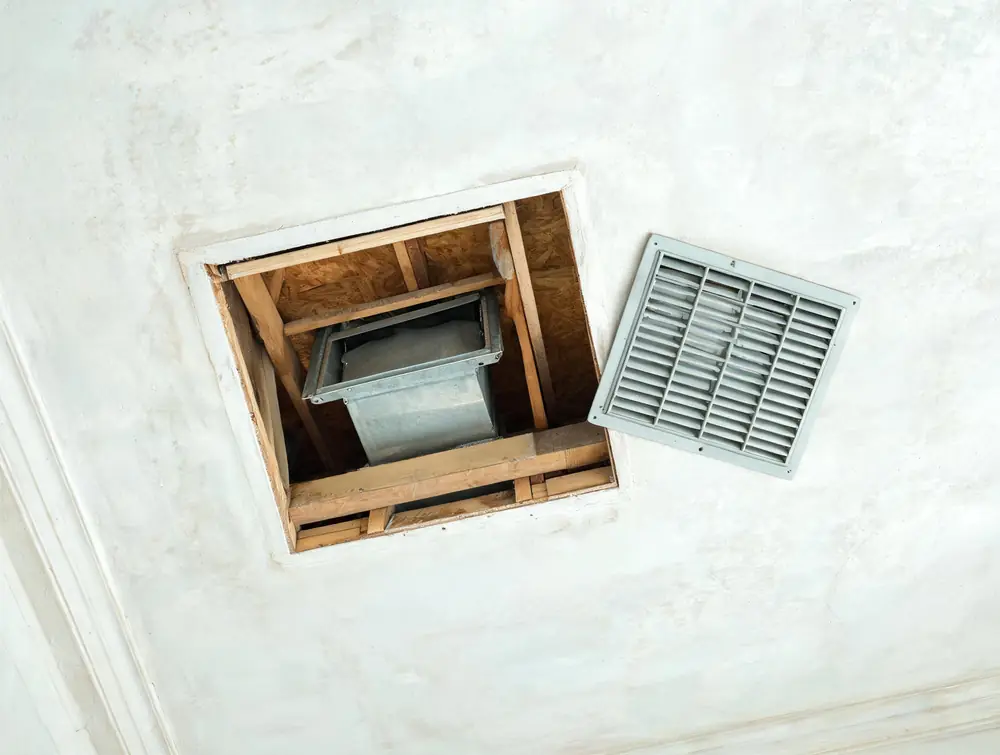
If you see mold on the blower wheel, smell mustiness each time the unit runs, or have several heads with the same problem, get them cleaned properly. Our HVAC and air duct mold remediation service in Gettysburg handles ductless heads, window units and central systems, and checks for moisture problems in the room that feed the growth. Call (717) 420-8919, 24 hours a day.