How Each Method Works
Dry ice blasting
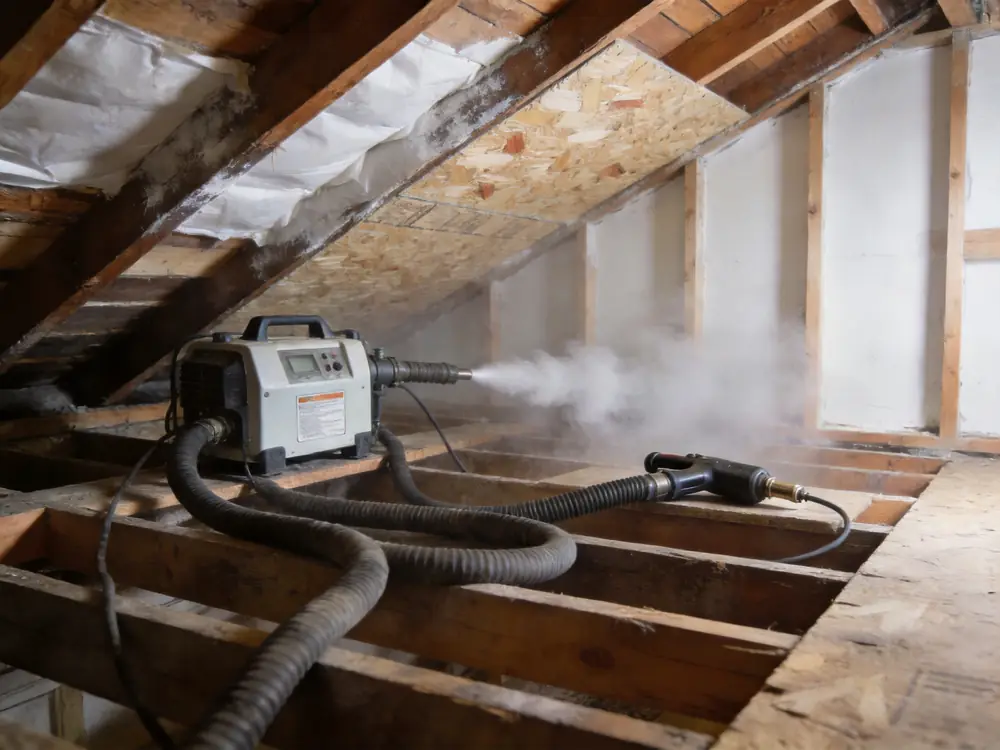
Dry ice blasting shoots small pellets of frozen carbon dioxide at the wood with compressed air. The pellets knock mold off the surface and then turn straight into gas, so there's no grit or water left behind. Only the removed mold and wood dust need to be captured with HEPA vacuums and air scrubbers.
Anyone unsure how far it has spread can have our Gettysburg mold remediation team take a look.
Soda blasting
Soda blasting uses sodium bicarbonate (baking soda) as the blast media. It's softer than sand, so it cleans wood without heavy gouging. The catch is volume: the spent soda settles as a fine white dust on insulation, framing and anything else in the attic, and it needs a thorough cleanup.
Hand sanding and wire brushing
Technicians HEPA vacuum the surface, then sand or wire brush the growth off by hand or with sanders connected to HEPA vacuums. It's slow on a big roof deck but precise, and it works in cramped corners where a blast nozzle can't reach.
Side-by-Side Comparison
| Factor | Dry ice blasting | Soda blasting | Hand sanding / wire brush |
|---|---|---|---|
| Speed on a full attic | Fastest | Fast | Slowest |
| Leftover media | None (turns to gas) | Baking soda dust | Sanding dust only |
| Stain removal | Very good | Very good | Moderate |
| Equipment cost | High | Moderate | Low |
| Noise | Very loud | Loud | Moderate |
| Tight spaces | Limited by hose and nozzle | Limited by hose and nozzle | Works well |
| Best for | Large attics, heavy growth | Large attics where cleanup time is acceptable | Small areas, spot growth, tight attics |
Cost Differences
Blasting has higher daily equipment costs, including a large air compressor, the blast machine and, for dry ice, a supply of pellets that must be delivered fresh because they sublimate. Hand work has low equipment costs but much more labor. On a small patch, such as mold around a bath fan duct, hand sanding almost always costs less. On a whole roof deck, blasting's speed can bring the total close to hand work, with a cleaner-looking result.
As a general reference, small mold areas under 10 square feet typically cost $500 to $1,500 in the Gettysburg area, and national averages for professional mold remediation run roughly $1,200 to $3,800. Full-attic blasting jobs vary widely, and final pricing comes after an inspection.
Safety and Containment
All three methods knock mold spores and dust loose, so containment matters more than the method. A proper job includes:
- Sealing the attic hatch or stairs and protecting the path through the house
- HEPA air scrubbers creating negative pressure so air flows into the attic, not out of it
- Respirators and protective suits for technicians, consistent with OSHA worker protection guidance
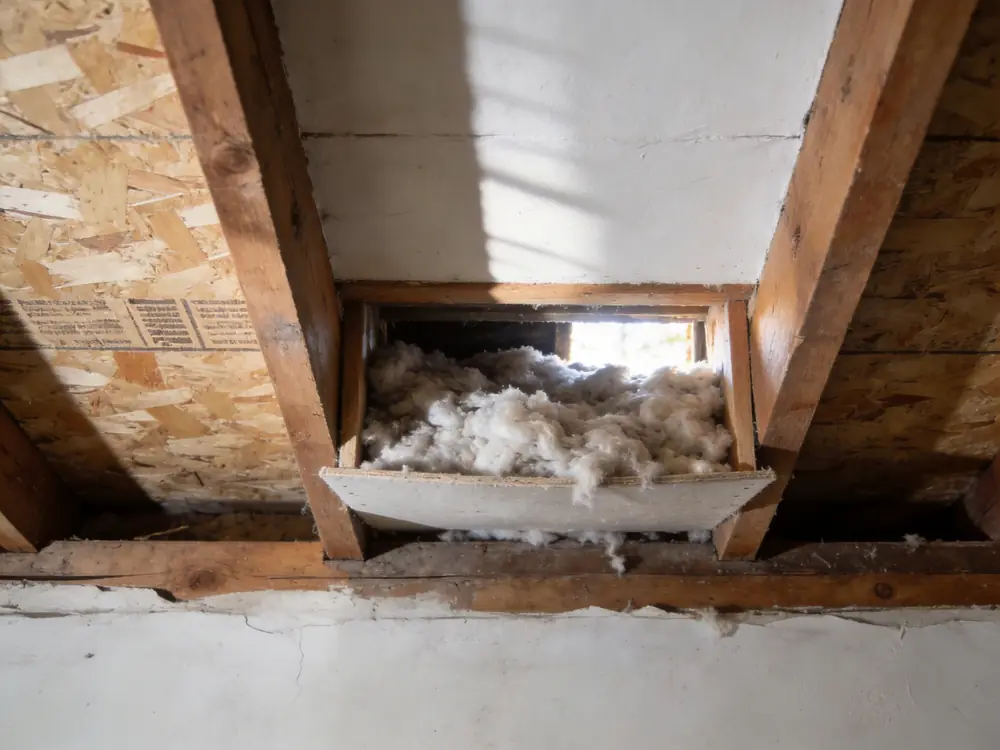
- HEPA vacuuming of surfaces and insulation after blasting or sanding
Dry ice has one extra safety concern: carbon dioxide gas. In a closed attic, CO2 can build up and displace oxygen, so crews need good ventilation and CO2 monitoring. This is not a DIY tool.
Which Method Fits Gettysburg Attics?
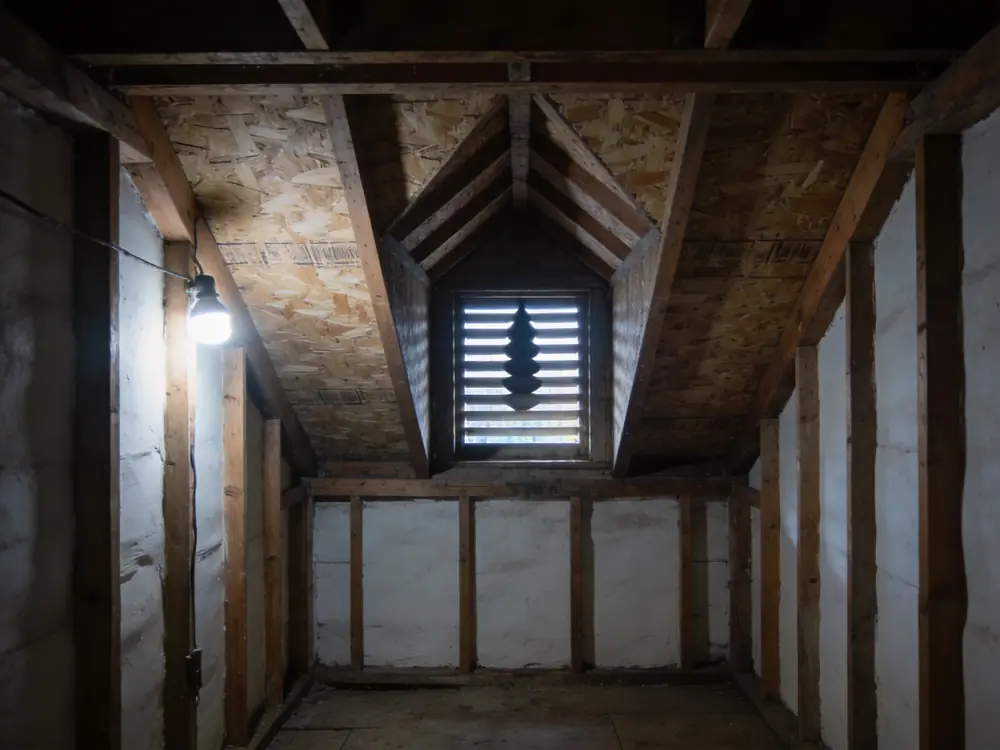
Many Gettysburg homes, especially older ones near downtown, have tight attics with board sheathing, chimneys and additions with separate roof lines. In those spaces, hand work or a mix of methods is often the best fit. Larger, newer homes with open truss attics are good candidates for dry ice blasting.
We often combine methods: blasting open sections of the roof deck and hand cleaning corners, eaves and areas around chimneys where a nozzle can't reach.
After the Blasting: Keep the Attic Dry
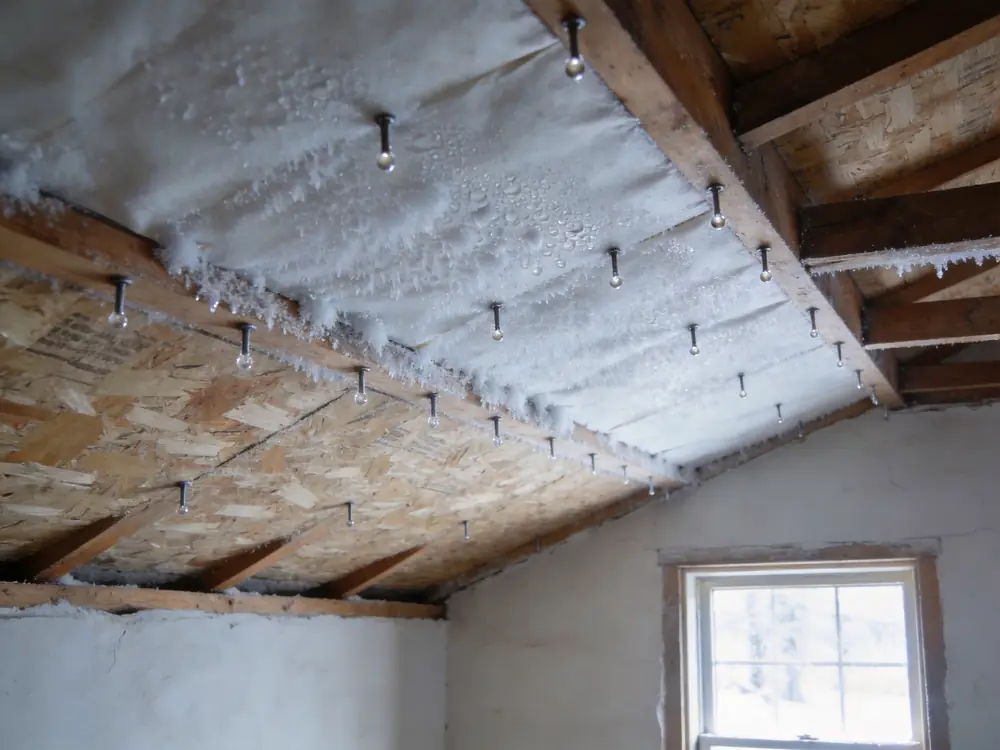
Once the wood is clean, the attic needs balanced airflow and no moisture coming in. That means venting bath fans outdoors, air sealing the attic floor, and making sure soffit intake and ridge or gable exhaust are working. Our guide to attic ventilation to prevent mold walks through what to check. The EPA also recommends keeping indoor humidity below 60 percent.
When to Call a Professional
If mold covers a large part of your roof deck, a professional can match the method to the attic and handle containment safely. Our attic mold remediation team in Gettysburg recommends the method that fits your attic, explains why and fixes the ventilation problem behind the growth. Call (717) 420-8919, open 24 hours.