Why Drywall Grows Mold So Easily
Drywall is a gypsum core wrapped in paper. That paper is cellulose, which is exactly what Stachybotrys chartarum and many other molds feed on. Once drywall gets wet and stays wet, mold can begin growing within 24 to 48 hours, according to the EPA. Stachybotrys, the mold most people call black mold, usually shows up after drywall has stayed soaked for a week or longer. If you want the background, read what black mold is.
Local conditions and pricing are covered by mold removal and remediation in Gettysburg.
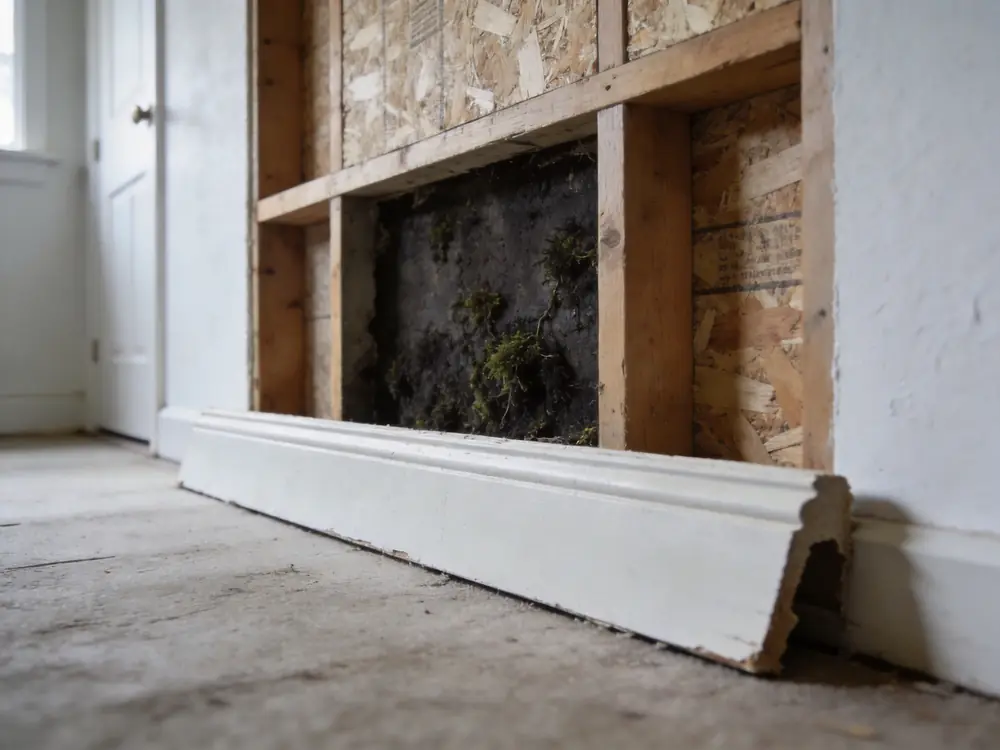
Mold often starts on the back side of the drywall, inside the wall cavity, where it's dark and moisture lingers. By the time you see spots on the room side, growth behind it is often larger.
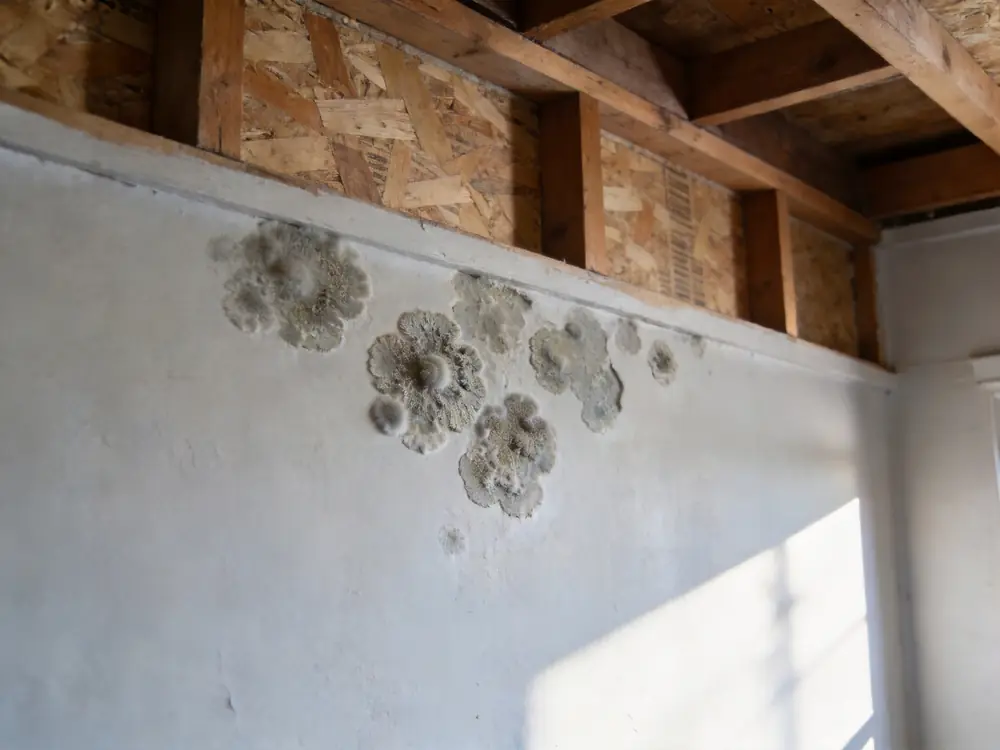
Clean It or Cut It Out?
| What you see | Likely approach |
|---|---|
| Light surface spots on glossy, painted drywall in a bathroom, drywall dry and firm | May be cleaned with detergent and water, then dried; watch for return |
| Mold on bare or flat-painted drywall paper | Cut out and replace |
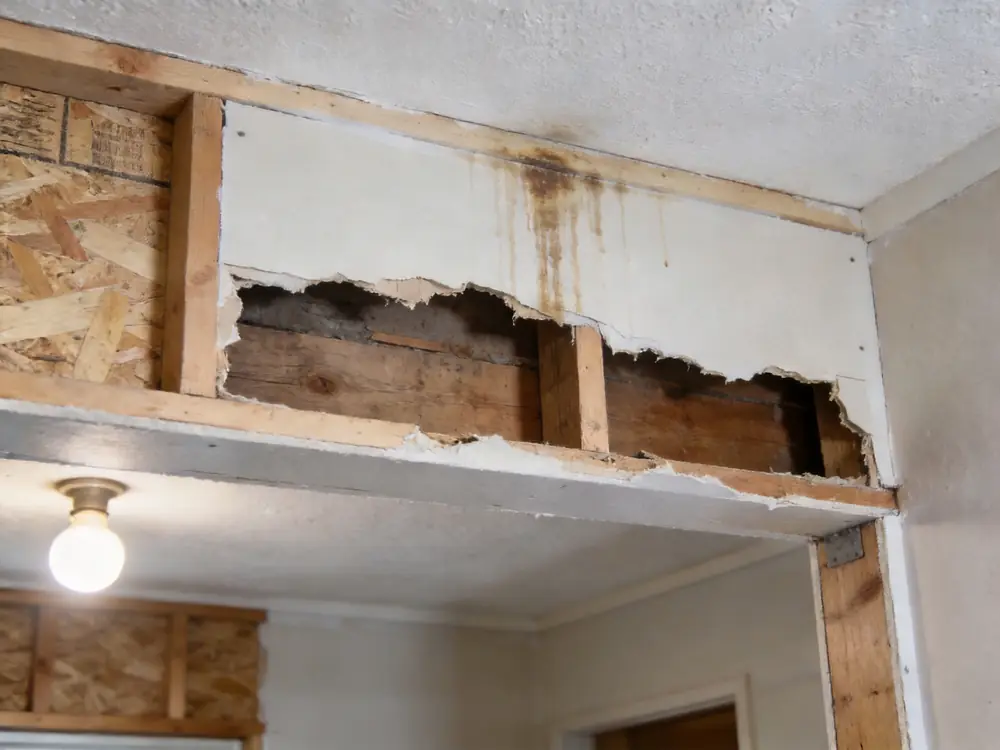
| Soft, crumbly, bulging, or stained drywall | Cut out and replace |
| Mold after flooding or sewage water | Cut out and replace, usually well above the water line |
| Musty smell, stains, but little visible mold | Inspect inside the wall before deciding |
The EPA's Brief Guide to Mold, Moisture, and Your Home notes that absorbent materials with mold may need to be thrown away because mold can grow into their empty spaces and crevices. Painting over it only hides the problem.
Don't bleach drywall. Bleach whitens the surface, but its water soaks in while the chlorine stays on top. See our article on whether bleach kills mold for why it fails on porous surfaces.
How Far Past the Stain to Remove
Visible mold is only part of the picture. The IICRC S520 approach is to remove moldy porous materials and check what lies behind them, not just clean the visible face. Many professionals cut at least 12 to 24 inches beyond the last visible spot, then use a moisture meter to confirm the remaining drywall is dry and clean. After flooding, cuts are often made in a straight line a foot or more above the water line.
Cutting in straight lines, often at 2-foot or 4-foot heights, also makes the rebuild easier and cleaner.
How Professionals Remove Moldy Drywall
- Find and fix the moisture. A leaking supply line, tub drain, window, or foundation seep has to be stopped first.
- Set up containment. Plastic sheeting seals off the area, and HEPA air scrubbers create negative pressure so spores don't escape.
- Mist and cut. The surface is misted lightly to limit dust, then cut out in clean sections.
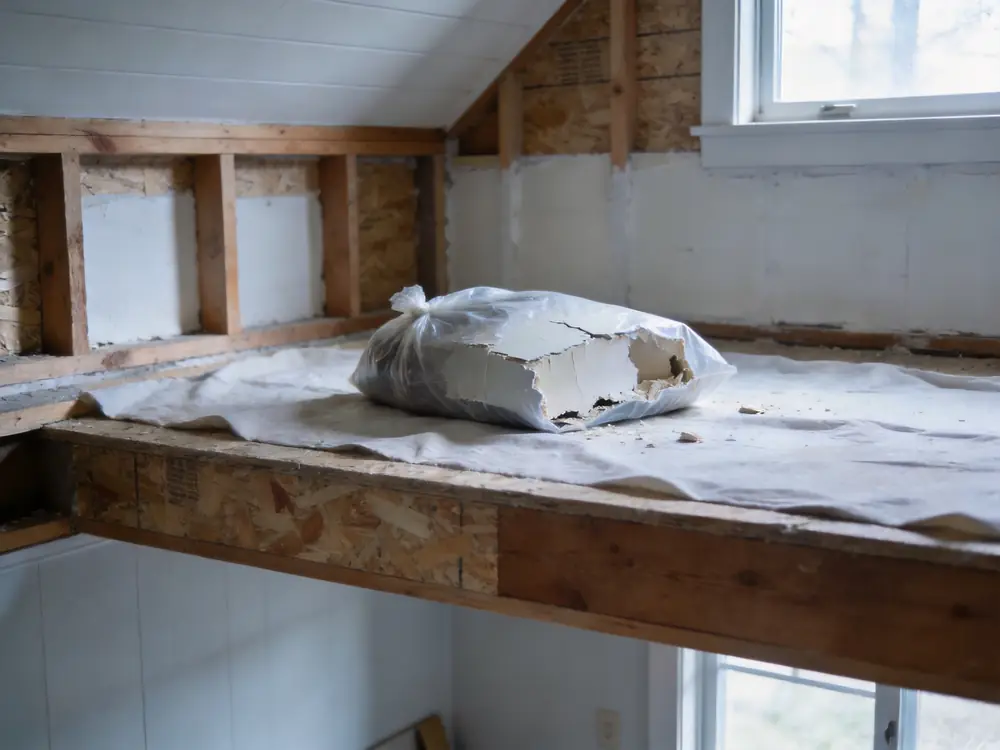
- Bag inside containment. Moldy drywall goes into heavy plastic bags before it leaves the work zone.
- Inspect the cavity. Studs, sill plates, and insulation are checked. Wet or moldy insulation is removed.
- Clean the framing. Studs are HEPA-vacuumed, wiped, and sanded where mold has stained the wood.
- Dry. Dehumidifiers and air movers bring framing to normal moisture levels.
- Clearance and rebuild. After independent clearance testing is recommended and passed, new drywall goes up.
Where We Find Moldy Drywall in Gettysburg
Gettysburg's older homes often have plaster walls in the original rooms and drywall in later additions and finished basements. That drywall is where most problems show up:
- Finished basements where drywall was installed against fieldstone or block walls that let groundwater through
- Bathrooms with slow tub or shower leaks, especially in older homes and student rentals near Gettysburg College
- Ceilings under roof leaks or attics with poor ventilation
- Exterior walls behind furniture, where condensation forms in winter
- Wall bottoms after storms or burst pipes that weren't dried within 48 hours
With about 43 inches of precipitation a year and humid summers, running a basement dehumidifier and keeping humidity below 60 percent, ideally 30 to 50 percent as the EPA recommends, helps keep drywall dry.
Can You Do It Yourself?
For a small area under about 10 square feet, the EPA says a homeowner can often handle cleanup with an N95 respirator, goggles, and gloves. Cutting out drywall releases dust and spores, though, and without containment they can spread through the house. If the area is larger, the mold is inside the wall, or anyone in the home has asthma or immune concerns, get professional help. Our mold inspection and testing service can check how far hidden growth extends.
When to Call a Professional
If black mold on drywall covers more than about 10 square feet, keeps returning, or followed a flood or long leak, call us. Our black mold removal service in Gettysburg uses containment, HEPA filtration, and moisture mapping to remove moldy drywall and make sure the framing behind it is clean and dry. Call (717) 420-8919, 24 hours a day.